Whether you commute daily or head out for leisurely weekend spins, a well-maintained rechargeable cycle keeps you moving reliably and affordably. This guide walks you through the essentials—what makes a rechargeable cycle tick, how to care for the battery, and safety upgrades that enhance your ride.
Understanding the Rechargeable Cycle
A rechargeable cycle pairs an electric motor with a removable, lithium-ion battery so you can pedal normally or enjoy powered assistance when hills or headwinds strike. The ability to recharge the battery at home, in the office, or on holiday enhances the contemporary electric riding experience, and removes the cost and clutter of disposable cells.
Removable batteries stand out for two big reasons. First, you can swap a depleted pack with a fresh one in seconds, eliminating downtime. Second, you charge the battery indoors where temperature and security are under control, which improves lifespan and rider convenience. Maintaining battery health—chiefly by charging correctly and avoiding over-discharge—directly affects how far your rechargeable cycle travels on each outing.
Explore the Virbike V-Series
Compare features, performance, and pricing across our top electric cycle range.
Virbike V1
from ₹34,999- 36 V • 7.8 Ah removable battery
- Real-world PAS up to ~40 km
- Single-speed • Dual disc brakes • LCD display
Virbike V1+
~₹39,999- 36 V 10.4 Ah battery • Extended PAS range
- Dual disc brakes • Integrated headlamp
- Refined alloy frame • LCD display
Virbike V2
₹44,999 – ₹47,498- 36 V system • Removable battery (55/75 km options)
- Shimano 7-speed • Adjustable fork • Color display
- Alloy frame • Dual disc brakes
Virbike V3
₹54,999 – ₹56,990- 36 V in-tube 13 Ah battery
- PAS range ~65–70 km • MAXXIS tyres
- M5 LCD • Integrated headlamp & horn
*Actual range varies with rider weight, terrain, tyre pressure, and assist mode. Prices/specs subject to change.
Key Components of a Rechargeable Cycle
Electric cycles share many familiar bicycle parts, yet a few components deserve special attention.
Motor and Drive Assistance
An electric hub or mid-drive motor provides smooth, on-demand torque. While the research concentrates on batteries, remember to check the motor’s mounting bolts and wiring whenever you clean your bike; loose connections can sap efficiency just as surely as a tired battery.
Removable, Rechargeable Battery
The heart of any rechargeable cycle is the battery. Its removable design allows effortless charging and replacement. A healthy pack delivers consistent voltage, which lets the motor draw power smoothly and increases overall range.
Intelligent Charging System
Pair your battery with a 36 V, 2 A charger that offers:
- Stable 2 A output for fast, efficient top-ups
- Smart power auto-cutoff that halts current once full, preventing costly overcharge
- LED indicators to show charging progress at a glance
- A built-in cooling fan to avoid overheating and prolong component life
Following the LED indicators on the charger reduces wear on cells, and supports long-term reliable use of your rechargeable cycle.
Brakes and Control Electronics
Because electric assistance makes higher speeds accessible to more riders, reliable braking is critical. Check pads, cables, and fluid (for hydraulic systems) routinely, and ensure motor cut-off sensors respond the instant you squeeze the brake lever.
LED Lights and Safety Features
Bright LED lights and an audible horn transform night riding. They improve your visibility to traffic and allow you to signal intent clearly. Waterproof housings and tool-free brackets make installation straightforward, so there is little excuse for riding unlit.
Battery Charging and Maintenance
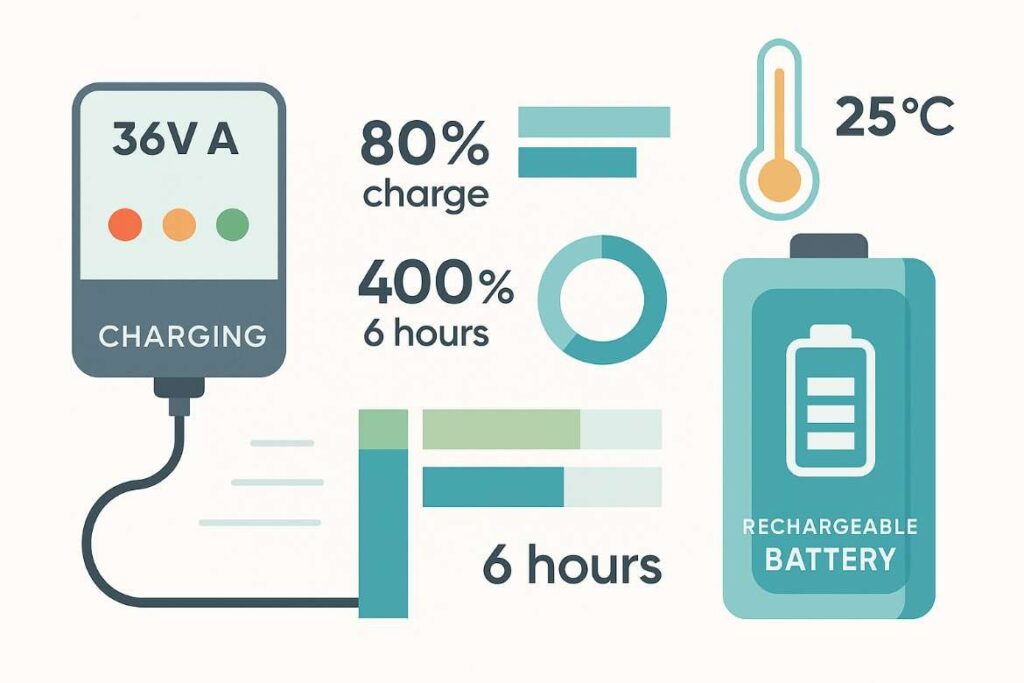
Your battery’s health is the single biggest influence on the performance of a rechargeable cycle. Adopting the right charging routine costs nothing yet yields thousands of additional kilometres.
- Use a purpose-built 36 V, 2 A charger: Its stable output, smart auto-cutoff, LED status lights, and cooling fan work together to guard against overcharging and overheating.
- Unplug once full: Leaving the pack connected after the LED shows green risks stressing the cells. Smart auto-cutoff helps, but removing the lead entirely is safer.
- Mind the temperature: Charge indoors between roughly 10 °C and 30 °C. Extremely hot or cold conditions shorten battery life.
- Avoid deep discharge: Lithium-ion chemistry dislikes being run down to zero. Recharge once the indicator drops to 20–30 % to keep capacity healthy.
- Stick to compatible kit: An off-spec charger may supply the wrong voltage or lack cooling, creating a fire or failure risk.
Common missteps—such as storing the pack empty for months or using an unventilated charger—invite premature ageing. Smart charging habits ensure your rechargeable cycle continues to deliver peak assistance ride after ride.
Enhancing Cycle Safety and Usability
Riding pleasure isn’t only about range; it’s also about confidence on the road. A handful of budget-friendly accessories amplify both safety and user experience.
Waterproof, Rechargeable Lights
Modern LED lights for rechargeable cycles clip on quickly and resist rain, so unexpected showers never dim your path. Multiple brightness settings let you conserve battery on well-lit streets and unleash maximum lumens on dark lanes. Always top up the light’s internal battery before setting off and test that both front and rear units illuminate.
Audible Horns and Alerts
A compact electronic horn pierces through traffic noise better than a traditional bell. Situate the button within thumb reach so you can warn inattentive drivers or pedestrians without taking hands off the bars.
Five-Step Night-Ride Checklist
- Select waterproof lights and a horn rated for your bike’s voltage or independent batteries.
- Mount them securely—shaking the bars should not loosen brackets.
- Test brightness and sound before every ride.
- Charge lights fully; dimming mid-ride undermines safety.
- Use daytime-running mode in overcast weather to stay visible.
Studies cited in the research show cyclists equipped with proper lighting and sound alerts are significantly less likely to suffer night-time accidents, so treat these accessories as essentials rather than luxuries.
Practical Tips for Cycle Users
Small, consistent habits keep your rechargeable cycle—and you—smiling kilometre after kilometre.
- Charge smart: Let the 36 V charger’s LED reach solid green, then disconnect. Overcharging is the enemy of every rechargeable cycle battery.
- Inspect regularly: A quick once-over before each outing—tyre pressure, brake bite, light operation—catches issues early.
- Clean gently: Use mild detergent and a soft brush. Avoid blasting electronics with high-pressure hoses.
- Store sensibly: A dry, room-temperature spot protects metal parts from rust and batteries from temperature extremes.
- Keep spares handy: A second battery turns range anxiety into extended adventure.
By following these straightforward practices, riders report longer battery life and fewer mechanical hiccups—proof that a little attention goes a long way.
Maximising Performance and Longevity
Lubricate the chain every few weeks, maintain correct tyre pressure, and service brakes at the first sign of fade. Each task takes minutes yet preserves the investment you made in a rechargeable cycle from Virbike.
Mistakes to Avoid
Neglecting routine charges, using mismatched chargers, and riding without lights after dusk undermine safety and efficiency. Treat manufacturer guidelines as a blueprint rather than a suggestion, and your rechargeable cycle will repay you with years of dependable service.
To make the most of your rechargeable cycle, consider exploring Virbike’s range of reliable e-bikes with detachable batteries designed for both commuting and leisure. Visit us at virbike.com to find the perfect model that suits your needs!
Explore the Virbike V-Series
Compare features, performance, and pricing across our top electric cycle range.
Virbike V1
from ₹34,999- 36 V • 7.8 Ah removable battery
- Real-world PAS up to ~40 km
- Single-speed • Dual disc brakes • LCD display
Virbike V1+
~₹39,999- 36 V 10.4 Ah battery • Extended PAS range
- Dual disc brakes • Integrated headlamp
- Refined alloy frame • LCD display
Virbike V2
₹44,999 – ₹47,498- 36 V system • Removable battery (55/75 km options)
- Shimano 7-speed • Adjustable fork • Color display
- Alloy frame • Dual disc brakes
Virbike V3
₹54,999 – ₹56,990- 36 V in-tube 13 Ah battery
- PAS range ~65–70 km • MAXXIS tyres
- M5 LCD • Integrated headlamp & horn
*Actual range varies with rider weight, terrain, tyre pressure, and assist mode. Prices/specs subject to change.
FAQ
Q1. What is a charging cycle?
A charging cycle refers to one complete process of discharging a battery and then fully recharging it. For a rechargeable cycle, keeping cycles moderate—topping up at around 20–30 % remaining—helps the pack last longer.
Q2. How long do rechargeable batteries charge?
With a 36 V, 2 A charger, most e-bike batteries reach full in 4–6 hours. LED indicators shift to green once the smart auto-cutoff ends current, signalling it’s time to unplug.
Q3. How are rechargeable batteries recharged?
Connect the battery to a compatible charger that provides a stable 2 A output, cooling fan, and auto-cutoff. The charger feeds current until the cells reach optimal voltage, then stops automatically to prevent overcharging.
Q4. What’s the best way to install waterproof lights on a rechargeable cycle?
Use the supplied tool-free brackets, position the front light to illuminate road edges, and angle the rear unit directly backward. Shake the handlebars lightly; if nothing moves, you’re set.
Q5. Why should I avoid leaving the battery on the charger overnight?
Although smart auto-cutoff protects against severe damage, extended trickle charge can still warm cells and shorten lifespan. Unplugging once the LED turns green preserves capacity.
Q6. Does a second battery improve range or performance?
Carrying a spare pack effectively doubles range without affecting motor output. Swap batteries when the first drops to around 30 % to keep assistance strong and avoid deep discharge.