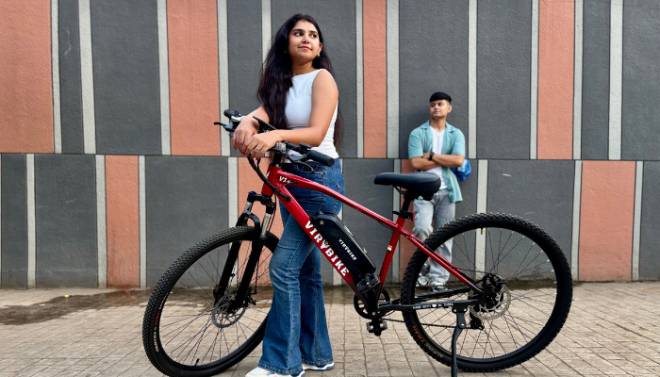
Electric bicycles have become a practical commuting option for urban Indian riders and weekend trail‑seekers. VirBike, an Indian manufacturer of e‑cycles, sells a range of affordable and durable models, and because VirBike’s bikes are sold directly through virbike.com, their prices and specifications are authoritative. The information below is taken from the product pages for VirBike V1, V2 and V3, updated for October 2025
VirBike E‑cycle Pricing
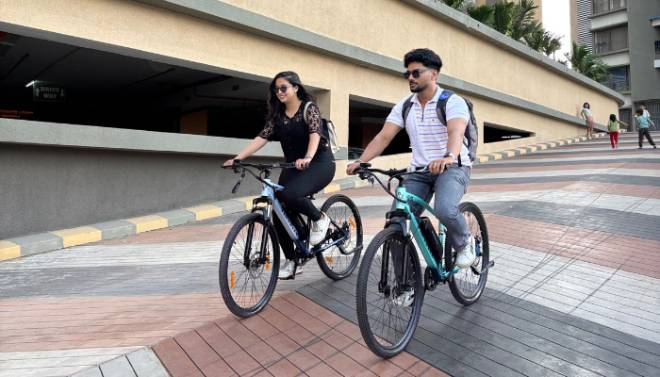
VirBike sells four models – the V1, V2 and V3. Each uses a 36‑volt brushless hub motor and a removable lithium‑ion battery, but the capacities, ranges and features vary. VirBike offers two range options on most bikes: 55 km and 75 km. The 75 km version includes a higher‑capacity battery for riders who want longer pedal‑assist (PAS) range. Current prices are summarised below.
| Model | Battery & Range | Key Features | Price (55 km range) | Price (75 km range) |
| VirBike V1 | 36 V 7.8 Ah Li‑ion (detachable). Range: ~35 km on throttle, up to 40 km on PAS. | 27.5 in alloy frame, single‑speed drivetrain, 3‑level PAS, LCD throttle display, dual disc brakes. | ₹34,999 | ₹37,498 (higher‑capacity battery) |
| VirBike V2 | 36 V 10.2 Ah Li‑ion (detachable). Range: ~45 km throttle, up to 50 km on PAS (55 km and 75 km battery options). | Hard‑tail MTB frame, adjustable 100 mm fork, Shimano TY300 7‑speed, coloured LCD display, front light, dual disc brakes. | ₹51,990 | ₹54,489 |
| VirBike V3 | 36 V 13 Ah Li‑ion in‑tube battery (detachable). Range: 55 km on throttle and 65–70 km on PAS. | Premium hard‑tail MTB with MAXXIS 27.5 × 2.2 in tyres, Shimano TY300 7‑speed, M5 LCD display, head‑tube LED light with horn, dual disc brakes, 13 Ah battery. | ₹56,990 | Not offered (only 55 km version) |
Which model suits which rider?
- Commuters and leisure riders: The VirBike V1 is a cost‑effective entry‑level choice. It uses a 7.8 Ah battery and a single‑speed drivetrain, making it simple to ride and maintain. The 55 km version costs ₹34,999. The 75 km upgrade is available for riders who want extra range (₹37,498).
- MTB enthusiasts: The VirBike V2 has a more rugged frame, front suspension, larger 29 × 2.2 in tyres and a coloured LCD display. V2 also includes an adjustable suspension fork and MTB‑oriented geometry.
- Long‑range riders and trail explorers: The VirBike V3 features a 13 Ah battery that offers 65–70 km PAS range and MAXXIS tyres for better off‑road grip. It is priced at ₹56,990 and is only sold in a 55 km version, but the larger battery provides substantially more mileage per charge.
Factors influencing VirBike pricing
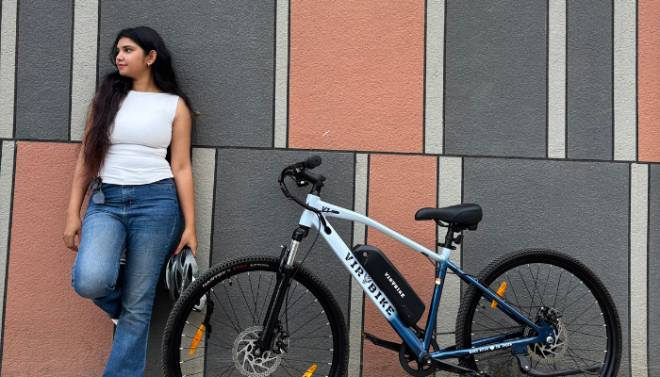
- Battery capacity: Larger amp‑hour (Ah) batteries extend range but increase price. For example, the V1’s 7.8 Ah battery keeps the price under ₹35 k, while the V3’s 13 Ah battery pushes the bike to around ₹57k.
- Motor and electronics: All VirBike models use a 36 V 250 W hub motor, so pricing differences mainly come from batteries, displays (simple LCD vs colour), and integrated lighting.
- Frame and components: Higher‑end models use aluminium alloy frames, larger tyres and upgraded gear systems (e.g., Shimano TY300 vs single‑speed), which adds cost.
- Accessories: VirBike includes basic accessories such as integrated lights and disc brakes. An optional alloy carrier with integrated rear light costs ₹1,199 and can be added to any model.
Hidden costs to remember
While the purchase price is the main expense, buyers should budget for maintenance and eventual battery replacement:
- Battery replacement: After 3–4 years, Li‑ion batteries lose capacity. Replacement batteries typically cost 30–40 % of the bike’s purchase price, so set aside ₹10,000–₹20,000 depending on the model.
- Consumables: Tyres, brake pads and chains will wear with use. Estimate ₹3,000–₹4,000 per year for routine upkeep.
- Accessories: A helmet, locks and lights add roughly ₹3,000 to the initial outlay.
Tips for buying a VirBike electric cycle
- Define your range needs: Choose the 55 km or 75 km battery based on your typical riding distance. Over‑estimating range will needlessly increase cost.
- Consider gear requirements: Single‑speed (V1) bikes are simple and low‑maintenance but struggle on hills. If you ride in varied terrain, models with Shimano 7‑speed gears (V2, V3) provide easier pedalling.
- Assess terrain: The V2 and V3’s suspension forks and larger tyres make them better for rough roads or light trails. The V3’s MAXXIS tyres and 13 Ah battery are ideal for longer off‑road excursions.
- Check warranty and service: VirBike offers nationwide service and a warranty covering the battery and motor. Purchasing from the official website ensures you receive after‑sales support.
- Budget for maintenance: Allocate about 10 % of the bike’s cost annually for servicing and parts. For example, a V1 costing ₹35 k would require around ₹3.5 k yearly for maintenance.
When to buy
VirBike’s website occasionally runs promotional pricing during festival periods like Diwali or the Great Indian Festival. Current (October 2025) prices shown above reflect the standard selling rates. If you can wait for a sale, you might save 5–10 %, but these events often have limited stock and run for short periods. Since VirBike sells directly online, there is no inflated MRP; the listed prices represent the actual cost.
Final thoughts
VirBike offers a clear range of electric cycles tailored to different budgets and riding styles. Understanding battery size, range, and component quality helps you match a bike to your daily commute or weekend adventures. By buying directly from VirBike’s site, you get transparent pricing, warranty support and access to genuine accessories. Use the information above to choose the right model and enjoy the benefits of electric cycling without guesswork.