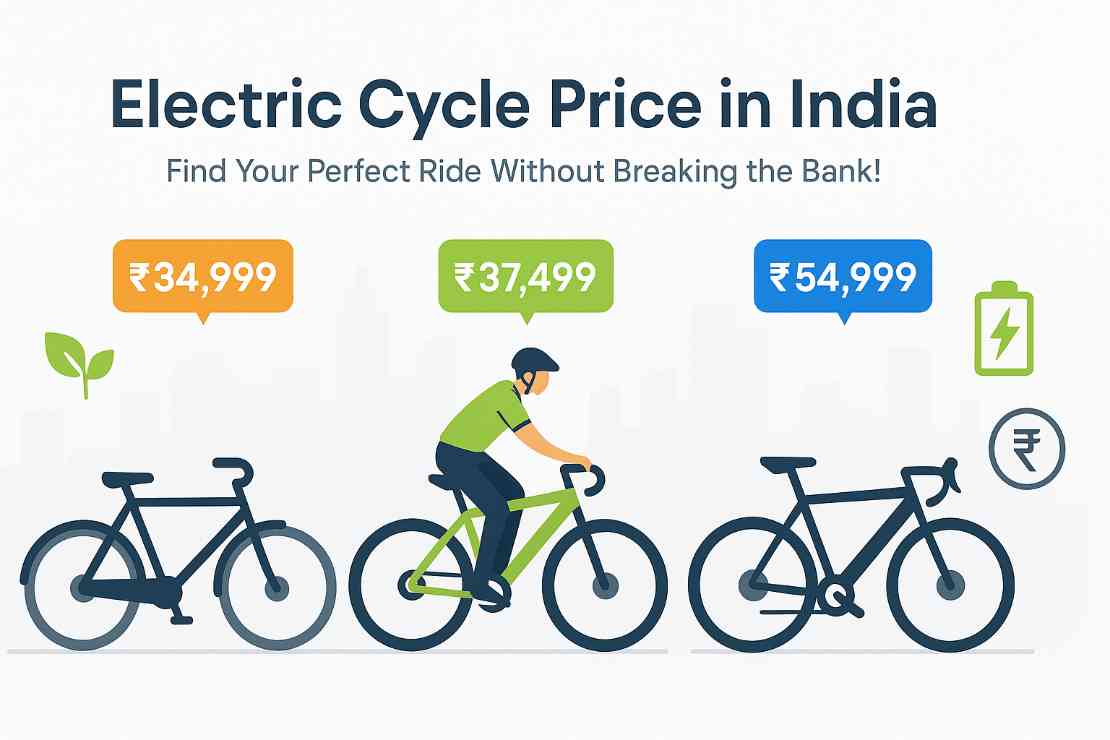
Electric cycles raced from niche novelty to mainstream mobility hero. Whether you want a wallet-friendly commuter, a weekend trail companion, or a high-performance fitness machine, today’s market serves every pocket. Understanding electric cycle price bands—and what you actually get for your money—helps you sidestep costly errors and secure the perfect ride.
Overview of Electric Cycle Pricing
Electric cycle price tags stretch from a rock-bottom ₹1,100 for ultra-basic models right up to about ₹1.5 lakh for fully loaded machines. The gulf reflects differences in battery technology, motor power, range, build quality, and smart features.
A standout example is the Virbike V3, which lists at ₹54,999 with up to ~55 km single-charge range.
If you’re new to the segment, follow this quick five-step path before parting with your money:
- List the daily distance you expect to cover.
- Compare electric cycle price and range tables across trusted online stores.
- Check state EV subsidies that shave thousands off the ticket.
- Fix a clear budget cap.
One of the biggest mistakes is focusing only on up-front cost and ignoring battery capacity, which determines how often you’ll be recharging—or pushing—the bike.
Explore the Virbike V-Series
Compare features, performance, and pricing across our top electric cycle range.
Virbike V1
from ₹34,999- 36 V • 7.8 Ah removable battery
- Real-world PAS up to ~40 km
- Single-speed • Dual disc brakes • LCD display
Virbike V1+
~₹39,999- 36 V 10.4 Ah battery • Extended PAS range
- Dual disc brakes • Integrated headlamp
- Refined alloy frame • LCD display
Virbike V2
₹44,999 – ₹47,498- 36 V system • Removable battery (55/75 km options)
- Shimano 7-speed • Adjustable fork • Color display
- Alloy frame • Dual disc brakes
Virbike V3
₹54,999 – ₹56,990- 36 V in-tube 13 Ah battery
- PAS range ~65–70 km • MAXXIS tyres
- M5 LCD • Integrated headlamp & horn
*Actual range varies with rider weight, terrain, tyre pressure, and assist mode. Prices/specs subject to change.
Budget-Friendly Electric Cycles
Price window: ₹34,999–₹37,498
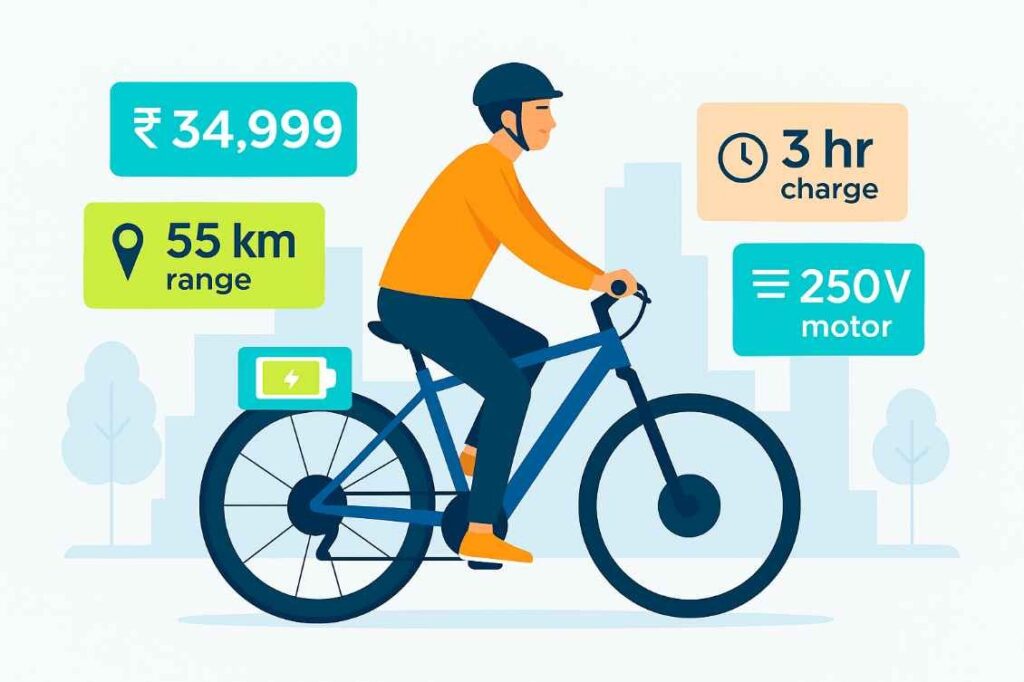
If you want a simple, no-nonsense electric commuter, the budget bracket delivers. Virbike V1 (₹34,999–₹37,498, depending on variant) offers:
- 250 W BLDC hub motor (licence-free top speed of 25 km/h)
- 36 V detachable lithium-ion battery
- 55–60 km real-world range in eco mode
- 3–4 hour standard charge time
Running cost works out at roughly 20 paise per kilometre—vastly cheaper than any petrol scooter. Models here usually share the same power figure, so compare battery size, not motor wattage. Also, examine charging time; a cheaper battery that needs eight hours on the plug could wreck weekday convenience.
Practical tip: Many states now offer small EV cycle subsidies. Check the transport department portal before you order—claiming the incentive online is often as easy as uploading an invoice.
Mid-Range Electric Cycles
Price window: ₹44,999–₹47,498
Move up a tier and you unlock stronger frames, LED or LCD displays, multiple ride modes, and longer warranties. Virbike V2 (₹44,999–₹47,498) provides: (Electric Bicycle India)
- 8.7 Ah battery (around 40–50 km range)
- Five electronic ride modes, ideal for mixed terrain
- Two-year battery warranty
Similarly, the Virbike V1 (alternate variant at ₹34,999–₹37,498) offers comparable everyday hardware. (Electric Bicycle India)
This bracket suits riders who mix weekday commuting with weekend joyrides. During research, don’t skip the fine print on battery warranty—replacing a pack outside coverage can cost more than half the bike’s price.
Buying roadmap:
- Fix your target spend inside the mid-range band.
- Shortlist by range first, then by ride comfort (tyre size, suspension).
- Test ride for ergonomics if a local dealer stocks your pick.
- Confirm warranty length on both motor and battery.
- Use an online coupon code—many brands, including Virbike, occasionally list promo deals that knock several thousand off.
Premium Electric Cycles
Price window: ₹50,000 – ₹60,000
Premium models cater to demanding urban commuters and fitness enthusiasts wanting top-tier spec sheets. Extended range, rapid charging, hydraulic disc brakes, and smartphone integration all drive the electric cycle price up here. While Virbike focuses on value, its premium option V3 (₹54,999) features a 0.37 kWh battery with up to ~55 km range and premium componentry.
Before splashing out, remember the total cost of ownership. Replacement batteries, accessories, and service visits add to the headline figure. Test rides are crucial; comfort at this price ought to be impeccable.
Factors Influencing Electric Cycle Prices
- Battery chemistry and capacity: Lithium-ion packs dominate because they’re lighter and discharge more efficiently, yet they form the single largest slice of overall electric cycle price. A higher-capacity 36 V battery naturally costs more than a 24 V pack, but it also extends range and lowers charging frequency.
- Motor and controller sophistication: While most Indian legal-limit e-cycles stick to 250 W, efficiency varies. Branded hub motors, smoother controllers, or torque sensors increase ride quality—and the bill.
- Component upgrades: Additions such as hydraulic disc brakes, multi-speed drivetrains, or throttle control can add thousands, even within the same range class. Design extras—internal cable routing or integrated lights—also push prices upward.
- Tech bells and whistles: Smart displays, Bluetooth connectivity, and OTA firmware updates bring convenience, yet each extra chip raises manufacturing cost.
Cost-Effective Benefits of Electric Cycles
Even the priciest battery bike saves money over fossil-fuel transport. Here’s how:
- Microscopic running cost: Real-world data show models like the Virbike V1 sip power at about ₹0.20 per km. Some ultra-efficient designs claim as low as ₹0.10. Compare that with ₹2–₹3 per km for a small petrol scooter and you’ll see long-term savings stack up fast.
- Lower maintenance: No oil, no clutch, fewer moving parts. Besides periodic brake pads and an occasional chain lube, upkeep is minimal. Skip a few petrol pump stops and the electric cycle price premium pays back within months.
- Eco and health gains: Swapping short car trips for pedal-assist rides slashes urban emissions while adding light exercise to your routine—win-win without gym fees.
Explore the Virbike V-Series
Compare features, performance, and pricing across our top electric cycle range.
Virbike V1
from ₹34,999- 36 V • 7.8 Ah removable battery
- Real-world PAS up to ~40 km
- Single-speed • Dual disc brakes • LCD display
Virbike V1+
~₹39,999- 36 V 10.4 Ah battery • Extended PAS range
- Dual disc brakes • Integrated headlamp
- Refined alloy frame • LCD display
Virbike V2
₹44,999 – ₹47,498- 36 V system • Removable battery (55/75 km options)
- Shimano 7-speed • Adjustable fork • Color display
- Alloy frame • Dual disc brakes
Virbike V3
₹54,999 – ₹56,990- 36 V in-tube 13 Ah battery
- PAS range ~65–70 km • MAXXIS tyres
- M5 LCD • Integrated headlamp & horn
*Actual range varies with rider weight, terrain, tyre pressure, and assist mode. Prices/specs subject to change.
Frequently Asked Questions
Q1. What is electric cycle price?
Electric cycle price in India starts around ₹34,999 for entry-level units and rises to roughly ₹1.5 lakh for premium, feature-rich models, with several popular options sitting between ₹15,000 and ₹45,000.
Q2. How do I pick the right battery size for my daily commute?
Match battery capacity to your average kilometres; if your round trip is 25 km, a 55 km-range model gives healthy headroom without overpaying for unused capacity.
Q3. Are electric cycles cheaper to run than petrol scooters?
Yes. Typical electricity cost is ₹0.10-₹0.20 per km versus ₹2-₹3 for petrol. Over 10,000 km, that’s a saving of ₹18,000-₹28,000.
Q4. My e-cycle shows reduced range after a year—is that normal?
Battery performance declines about 5-10% annually. Keep tyres inflated, charge within recommended voltage, and avoid full discharges to slow degradation. If range drops sharply, a warranty claim may be in order.