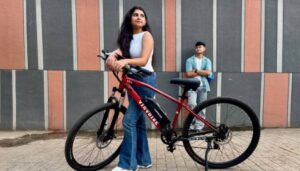
A mountain gear cycle stands apart from everyday road or hybrid bikes in three core ways: its geometry, its components, and its unwavering focus on rough terrain. The frame is deliberately robust, often featuring thicker tubing and reinforced welds to cope with uneven ground. Wider, knobbly tyres bite into loose dirt and gravel, while powerful suspension units flatten bumps and roots before they rattle your wrists.
Gears transform raw muscle into forward motion over mixed gradients. By flicking a shifter, you can drop into an easier ratio for a steep climb, then click up to a higher gear and surge along a fire road without spinning out. This adjustability prevents exhaustion, improves control, and ultimately lets you travel further. Ignore the gears and you risk grinding up hills in too high a ratio or spinning wildly on descents – two common errors that waste energy and upset balance.
Because MTB cycles thrive in all sorts of environments, they double as versatile commuters when fitted with smoother tyres. That adaptability explains why statistics consistently rank mountain bikes as one of the most popular styles sold online: you buy one machine and unlock city shortcuts, weekend trail fun, and countryside touring in a single package.
Key Features to Consider
Frame material: the backbone of durability
Your frame choice determines weight, strength, and ride feel. Steel, aluminium, and carbon fibre dominate the market. Steel has a natural flex that softens vibrations but tips the scale heavier. Aluminium keeps weight low without eye-watering cost and resists corrosion admirably – a sensible sweet spot for many riders. Carbon fibre shaves grams further and can be tuned for stiffness in key areas; however, you pay a premium for that race-ready performance. Whichever material you favour, ensure the welding and paint finish look tidy, as they’re the first defence against long-term fatigue.
Gear range: tailored for rugged trails
Most MTB cycles ship with between 18 and 27 gears, split across front chainrings and rear cogs. For typical Indian hill stations or rocky Western Ghats paths, a wide spread – think 2×9 or 3×8 setups – offers the low ratios you’ll need when the gradient surges. An overly narrow range forces you to pedal harder than necessary or, worse, get off and push. While browsing product pages, scan the specifications for cassette size (e.g., 11‑34T) and front chainrings (e.g., 22/36T). Larger numbers equal easier climbing gears.
Practical tip: on your first ride, experiment. Shift into lower gears before the climb starts rather than mid‑slope. You’ll maintain momentum and avoid chain strain.
Braking system: confident stopping power
Steep, loose trails demand strong brakes that modulate speed precisely. Disc brakes (mechanical or hydraulic) outperform traditional rim brakes in both dry dust and sloppy monsoon mud. They grip the rotor close to the wheel hub, well away from tyre spray, and continue working even when your rims are caked in grit. For a D2C buyer upgrading from a city bike, disc brakes may feel like a revelation: shorter stopping distances and one‑finger control reduce arm fatigue on long descents.
Wheel and tyre combination
Standard MTB wheels measure 27.5 or 29 inches in diameter. Smaller 27.5‑inch hoops change direction quickly – perfect for twisty woodland paths. Larger 29ers roll over obstacles more smoothly and maintain speed on open ground. Match them with a tyre width between 2.1 and 2.4 inches for all‑round trail grip. Remember, wider tyres lower pressure, spreading impact forces and providing extra comfort without relying solely on suspension.
Finishing kit and touchpoints
A comfortable saddle, correctly sized handlebars, and quality lock‑on grips matter more than many first‑time buyers realise. These touchpoints are where your body meets the bike; if they rub, slip, or flex too much, every kilometre feels longer. Reputable online retailers list the width and rise of bars as well as seat post length – measurements worth cross‑checking against your height.
Suspension Systems: Smooth Confidence on Any Surface
Every pothole, root, and rocky drop sends shockwaves up through your wheels. A good suspension system acts like a translator, turning that chaotic vibration into a muted thud you barely notice.
How suspension works
Inside the fork and, on some models, the rear shock, a combination of spring (coil or air) and damping oil compresses under impact and rebounds in a controlled manner. That movement keeps tyres glued to the ground rather than pinging off, giving you more grip for braking and cornering.
Types of suspension
• Rigid: no suspension at all. Rare on modern MTBs except minimalist gravel builds.
• Hardtail: suspension fork up front, solid rear triangle. This setup balances weight, price, and efficiency; you still get bump absorption where you need it most.
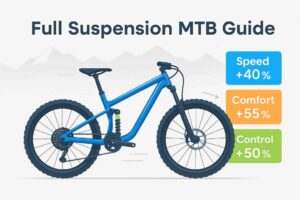
• Full suspension (or “dual‑sus”): both fork and rear shock move. Long‑travel designs swallow big hits, ideal for technical downhill lines. Shorter‑travel versions excel at marathon rides where comfort trumps outright speed.
Choosing the wrong type is a frequent misstep. If your local terrain consists of gentle forest tracks, a full‑suspension frame is overkill and heavier than necessary. Equally, tackling rocky descents on a rigid bike will rattle your fillings and sap energy fast.
Maintenance matters
Oil seals dry out, pivots creak, and air pressures drift. A simple five‑minute post‑ride wipe‑down prolongs seals, while a quarterly check of suspension sag ensures the fork or shock sits in its optimum operating window. Ignore this and you could lose up to 30 % of intended impact reduction, turning cushioned bliss into teeth‑chattering chaos.
Matching suspension travel to your riding
Think of travel – the distance the fork/shock can compress – as a cushion thickness. Around 100‑120 mm suits cross‑country loops; 130‑150 mm feels plush on mixed single‑track; anything above 150 mm targets gravity‑fed descents. Heavier riders may prefer a touch more travel or firmer spring rates to keep the bike sitting level.
Popular Brands and Options

- Virbike: Virbike, whose accessories are gaining momentum among weekend warriors, sells tubeless‑ready tyre sealant and ergonomic grips that complement any of the bikes above. A small upgrade like this can fine‑tune comfort without blowing the budget. You can purchase Virbike cycles on Amazon.
- Hero: Hero is known for value‑driven builds that still pack reliable drivetrains and disc brakes.
- Lifelong: Lifelong is known for value‑driven builds that still pack reliable drivetrains and disc brakes.
- Hercules: If you crave extra flair, Hercules offers models with striking paintwork and trail‑ready component mixes.
- Vesco: If you crave extra flair, Vesco offers models with striking paintwork and trail‑ready component mixes.
Additional Features and Benefits
Disc brakes have already earned praise for wet‑weather stopping, but they offer another perk: they barely wear the wheel rim, so your wheels last longer and stay true. That translates to smoother rides and fewer workshop visits.
Most manufacturers support their frames with warranties that span several years – your ticket to peace of mind. Register the serial number as soon as the parcel lands; it keeps any claims swift should the unexpected happen.
Modern MTB cycles also arrive with varied extras:
• Quick‑release seat clamps let you adjust saddle height mid‑ride, a blessing when alternating between climbs and descents.
• Threaded bottle‑cage mounts accommodate hydration or tool bottles, turning the bike into a lightweight touring rig when needed.
• Internal cable routing tucks shift and brake lines inside the frame, protecting them from grit and lending a sleek silhouette.
Combine these touches with the versatile gear range and you own a machine that adapts effortlessly. Commute to work on Monday, explore a forest loop on Saturday, and attack a hilly charity ride next month – all on the same wheels.
Ready to enhance your mountain biking experience with a reliable e‑bike? Explore our range of value‑focused electric bicycles at virbike.com to find the perfect model for your adventures!
VirBike Electric Cycles: Models & Key Highlights
If you’re considering an electric option, VirBike’s e‑cycle lineup offers features that complement MTB riding while meeting India’s legal requirements. Highlights include:
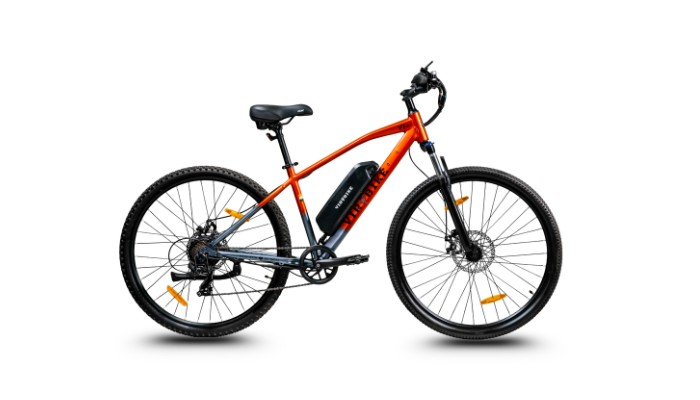
- Powerful yet efficient motors: Every VirBike model uses a 36‑volt brushless 250 W hub motor paired with a removable lithium‑ion battery. These motors provide smooth assistance and comply with the 25 km/h throttle speed limit set for electric cycles.
- Range options to suit your lifestyle: VirBike offers both 55 km and 75 km range choices. The entry‑level V1 provides around 35 km on throttle and up to 40 km using pedal assist, while the top‑end V3’s 13 Ah battery delivers 65–70 km under PAS.
- Quality components and comfort: Models feature lightweight aluminium alloy frames, adjustable suspension forks and Shimano 7‑speed drivetrains on the V2 and V3. The V3 also sports MAXXIS 27.5 × 2.2 inch tyres for enhanced off‑road grip. Dual disc brakes and LCD displays are standard across the range.
- Fast charging and user‑friendly extras: A detachable intube battery can reach 80 % charge in about 2.5 hours using a normal home socket. The multifunction LCD display shows speed and remaining range, and five pedal‑assist levels give you control over how much help you receive.
- No licence needed: VirBike electric cycles fall under India’s low‑speed category, so you can ride them without a driving licence—making them accessible to commuters, students and leisure riders alike.
These features—along with transparent pricing, nationwide service and warranties—make VirBike cycles a compelling upgrade for riders seeking an electric alternative without compromising the versatility of a traditional MTB.
Frequently Asked Questions
Q1. What is an MTB cycle?
An MTB cycle, short for mountain bike, is a bicycle designed with sturdy frames, wider tyres, multiple gears, and suspension systems so you can ride comfortably over rough, uneven terrain.
Q2. What does MTB mean in cycling?
MTB stands for “mountain bike” and indicates a style of bicycle purpose‑built for off‑road trails, offering enhanced durability, traction, and control compared with road or hybrid bikes.
Q3. How do I know which suspension type suits my riding?
Match the system to terrain: hardtails work well on light to moderate trails, while full‑suspension bikes excel on rocky descents. If most rides are smooth paths, a hardtail saves weight and cost.
Q4. Why are disc brakes recommended over rim brakes for mountain biking?
Disc brakes deliver stronger, more consistent stopping power, especially in wet or muddy conditions, because the braking surface is away from tyre spray and debris.
Q5. My gears skip when I pedal hard uphill. What should I check?
First ensure the derailleur is correctly adjusted and the chain isn’t worn. A quick barrel‑adjustment twist often realigns shifting; if in doubt, visit a mechanic before the issue worsens.
Q6. Do online prices differ much between brands, and how can I spot good value?
Prices vary based on frame material, suspension travel, and drivetrain level. Compare specification tables: a bike offering aluminium frame, disc brakes, and a wide gear range at a lower price usually represents strong value, provided the warranty matches competitors.