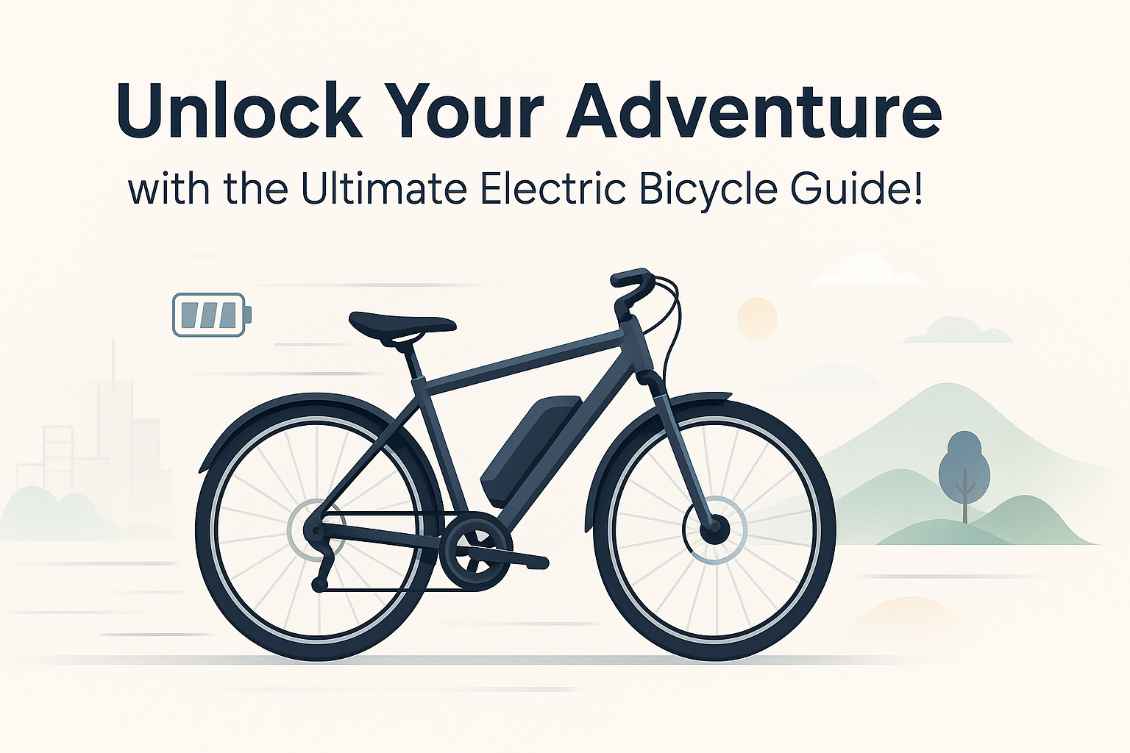
Electric bicycles have transitioned from intriguing novelties to everyday essentials in record time. Whether you’re eyeing a cleaner commute, a faster school run, or simply a fun way to explore the countryside, a electric bicycle offers a compelling mix of performance, low running costs, and advanced technology. Use this guide to understand exactly what makes these machines tick and how to choose the right model for your lifestyle.
Understanding Electric Bicycles
Electric bicycles use a compact electric motor for propulsion, drawing energy from a rechargeable battery mounted on (or neatly integrated into) the frame. Because there’s no tailpipe, produce zero local emissions and ride in near silence. Fewer moving parts than a petrol-powered two-wheeler also translate into lower maintenance: no oil changes, no spark plugs, and far less wear-and-tear on the drivetrain.
Charging is straightforward. Most owners simply plug the battery into a standard domestic socket overnight, and many apartment blocks now allow wall-mounted chargers in shared parking bays. Running costs are measured in pennies rather than pounds; a full charge costs only a fraction of a tank of petrol.
Performance and Range
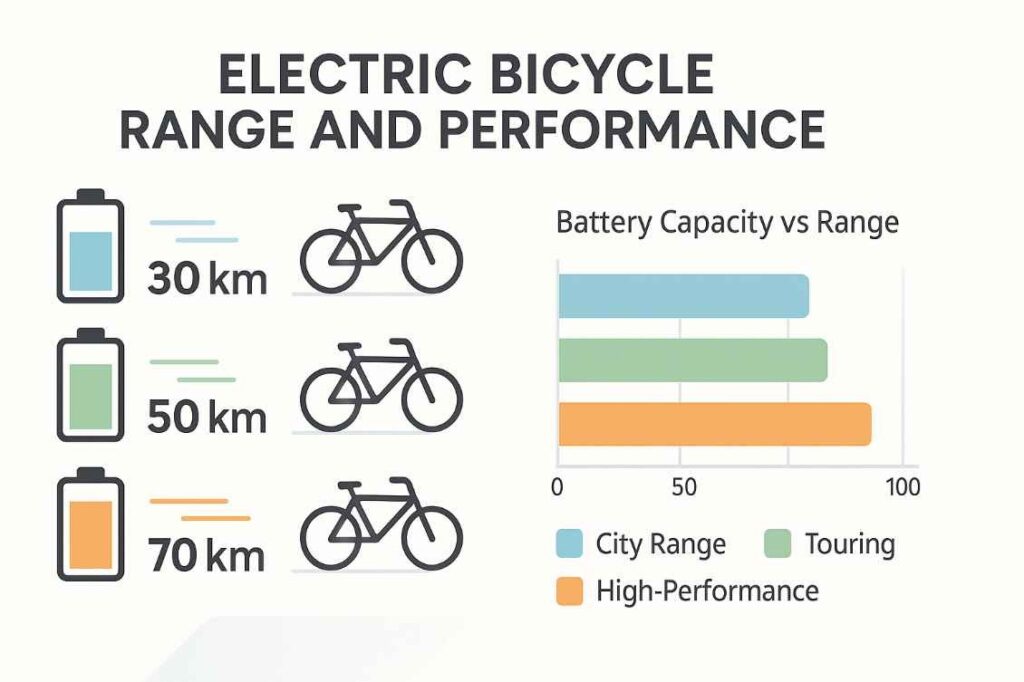
Early electric bicycles struggled to match their petrol cousins for speed or endurance. Those days are gone. High-performance models now deliver exhilarating acceleration and, in some cases, headline-grabbing range figures.
Battery size remains the biggest influence on range. A larger pack keeps you moving longer. However, it adds cost and weight. Motor efficiency matters too: brushless designs sip power more sparingly than older brushed units. As a rule of thumb, expect a well-specced mid-range electric bicycle to manage 40–70 kilometres in mixed conditions. Low-speed city models top out at modest velocities to conserve energy, whereas high-speed editions can rival—and occasionally exceed—the top speed of comparable petrol bikes.
Design and Technology
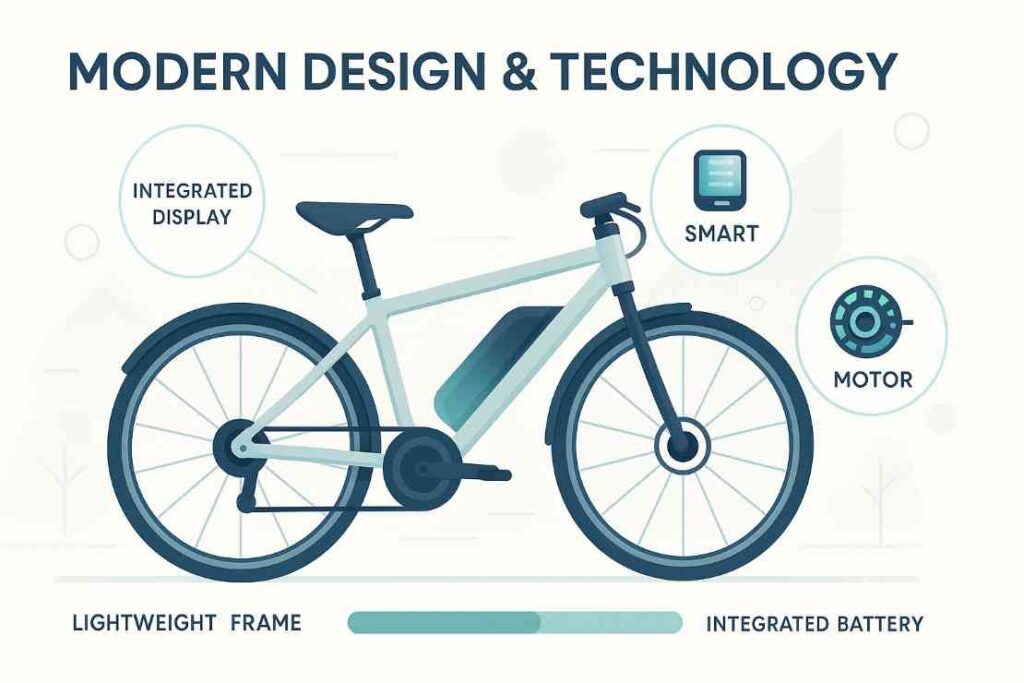
Manufacturers have embraced lightweight materials to offset battery mass. Aluminium alloy frames dominate thanks to their ideal blend of strength, corrosion resistance, and affordability. Sleek tubing hides cables, controllers, and sometimes even the battery, giving modern electric bicycles a clean, minimalist appearance.
Under the skin, advanced brushless motors deliver high peak outputs without the whine or maintenance headaches of older designs. Smart ride-assist systems constantly sample your speed, gradient, and pedal pressure, then adjust motor support to keep effort consistent. The result is a natural, seamless riding experience—enhancing your strength rather than dragging you along.
Compact handlebar displays show speed, remaining range, and power mode at a glance. Many pair with smartphone apps for route planning, performance analytics, and even firmware updates. If you opt for a premium model like Virbike’s commuter line-up, the user can lock or unlock the bike and customise power curves directly from their phone.
Explore the Virbike V-Series
Compare features, performance, and pricing across our top electric cycle range.
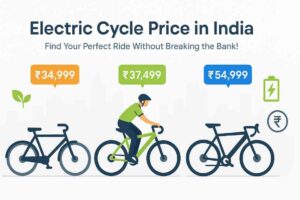
Virbike V1
from ₹34,999- 36 V • 7.8 Ah removable battery
- Real-world PAS up to ~40 km
- Single-speed • Dual disc brakes • LCD display
Virbike V1+
~₹39,999- 36 V 10.4 Ah battery • Extended PAS range
- Dual disc brakes • Integrated headlamp
- Refined alloy frame • LCD display
Virbike V2
₹44,999 – ₹47,498- 36 V system • Removable battery (55/75 km options)
- Shimano 7-speed • Adjustable fork • Color display
- Alloy frame • Dual disc brakes
Virbike V3
₹54,999 – ₹56,990- 36 V in-tube 13 Ah battery
- PAS range ~65–70 km • MAXXIS tyres
- M5 LCD • Integrated headlamp & horn
*Actual range varies with rider weight, terrain, tyre pressure, and assist mode. Prices/specs subject to change.
Comfort and Safety Features
You no longer need to compromise comfort for battery range. Premium suspension systems—adjustable front forks and rear shock absorbers—soak up potholes and gravel tracks alike. If you regularly tackle rough roads, insist on this spec.
Stopping safely is critical when instantaneous torque is only a thumb-twist away. Hydraulic disc brakes supply reliable bite in rain or shine and can shorten stopping distances by up to 30% in wet conditions compared with mechanical rim brakes.
A modern cockpit rounds out the package. Bright, back-lit displays remain legible in sunlight, while USB charge ports keep your phone topped up for navigation. Integrated LED lighting, often powered directly from the main battery, means you never forget fresh batteries for your lights again.
Cost and Maintenance
Low running costs remain an electric bicycle’s strongest argument. A full battery charge costs only a few hundred rupees—mere pennies in sterling—versus the escalating price of petrol. Routine maintenance involves checking tyre pressures, cleaning the chain if your model uses one, and updating firmware when prompted.
Because there’s no internal-combustion engine, you avoid oil changes, air-filter swaps, and many of the labour charges that accompany them. Batteries in advanced models endure hundreds of charge cycles before noticeable capacity loss. Quick-charge functionality found on certain bikes replenishes 80% of capacity in under an hour, reducing downtime on busy days.
Chains do require attention: regular cleaning, lubrication, and tension adjustments protect efficiency and prevent premature wear. Neglect here is the most common mistake new owners make, often leading to unnecessary workshop bills.
How to Choose Your Electric Bicycle
- Define your riding pattern. Daily city commute? Weekend trail adventures? Long-distance touring? Your range, suspension, and luggage needs hinge on this answer.
- Set a realistic budget. Remember to factor in accessories—helmet, locks, home charger—and ongoing maintenance.
- Evaluate range honestly. Overestimate your typical rides and include detours; range anxiety vanishes if you rarely dip below 25% battery.
- Test ride multiple models. Pay attention to motor smoothness, brake feel, and display readability.
- Check after-sales support. Spare parts availability and responsive service centres keep you wheeling happily for years.
Common Mistakes to Avoid
- Choosing a battery that’s too small for your daily mileage, then blaming the bike for short range.
- Ignoring chain maintenance on chain-drive models. A grimy, dry chain saps efficiency and wears cogs prematurely.
- Skipping a proper test ride. Suspension firmness, handlebar reach, or display glare may feel fine in a showroom yet irritate on the open road.
- Delaying installation of a home charging point. Waiting for public chargers adds needless hassle and limits spontaneity.
The Road Ahead
Electric bicycles already outpace petrol equivalents on running costs, ease of use, and environmental impact. As battery technology, motor efficiency, and charger availability continue to improve, the barriers that once deterred prospective buyers fall away. Whether you embrace the 520-kilometre capability of top-tier machines or select a wallet-friendly commuter, an electric bicycle positions you at the forefront of sustainable personal mobility.
Frequently Asked Questions
Q1. What is an electric bicycle?
An electric bicycle is a two-wheeler that combines pedals with a battery-powered motor, allowing you to ride with manual effort, full electric thrust, or anything in between. It produces no exhaust emissions and offers far lower running costs than petrol-powered bikes.
Q2. What is an electric bicycle for adults?
Adult electric bicycles are full-sized models designed to carry grown riders comfortably. They feature higher load ratings, more powerful motors, and often greater range than youth versions, making them ideal for commuting or leisure rides.
Q3. How do I install a home charging point for my electric bicycle?
Most owners simply use a dedicated three-pin socket in a garage or hallway. Mount the charger securely on the wall, ensure the socket has RCD protection, and keep the area dry. If you live in a block of flats, request permission from building management before fitting a socket in shared parking bays.
Q4. Why choose an electric bicycle over a petrol-powered two-wheeler?
You enjoy significantly lower running and maintenance costs, quieter operation, and zero local emissions, all while retaining comparable acceleration and, on high-speed models, similar top-end performance.
Q5. What should I do if my electric bicycle’s range suddenly drops?
First, check tyre pressures and ensure the chain (if fitted) is clean and lubricated. Confirm you’re riding in the intended power mode and that the battery is fully charged. Persistent problems may indicate battery degradation or a motor/controller issue—contact your service centre for diagnostics.Ready to enjoy the benefits of low-cost commuting with an electric bicycle? Explore our value-focused models at virbike.com and find the perfect e-bike for your daily rides and leisurely adventures!
Explore the Virbike V-Series
Compare features, performance, and pricing across our top electric cycle range.
Virbike V1
from ₹34,999- 36 V • 7.8 Ah removable battery
- Real-world PAS up to ~40 km
- Single-speed • Dual disc brakes • LCD display
Virbike V1+
~₹39,999- 36 V 10.4 Ah battery • Extended PAS range
- Dual disc brakes • Integrated headlamp
- Refined alloy frame • LCD display
Virbike V2
₹44,999 – ₹47,498- 36 V system • Removable battery (55/75 km options)
- Shimano 7-speed • Adjustable fork • Color display
- Alloy frame • Dual disc brakes
Virbike V3
₹54,999 – ₹56,990- 36 V in-tube 13 Ah battery
- PAS range ~65–70 km • MAXXIS tyres
- M5 LCD • Integrated headlamp & horn
*Actual range varies with rider weight, terrain, tyre pressure, and assist mode. Prices/specs subject to change.