Shifting from a conventional pedal-only cycle or a petrol-powered two-wheeler to a battery bicycle feels liberating. You gain the zip of an electric motor, the calm of silent running and the satisfaction of lower daily costs. Yet, when you start comparing models, the battery bicycle price spectrum can appear baffling. This guide unpacks that spectrum so you can judge value with confidence, steer clear of common pitfalls and ride away knowing you secured the right deal.
How Battery Bicycles Work and Why They Cost What They Do
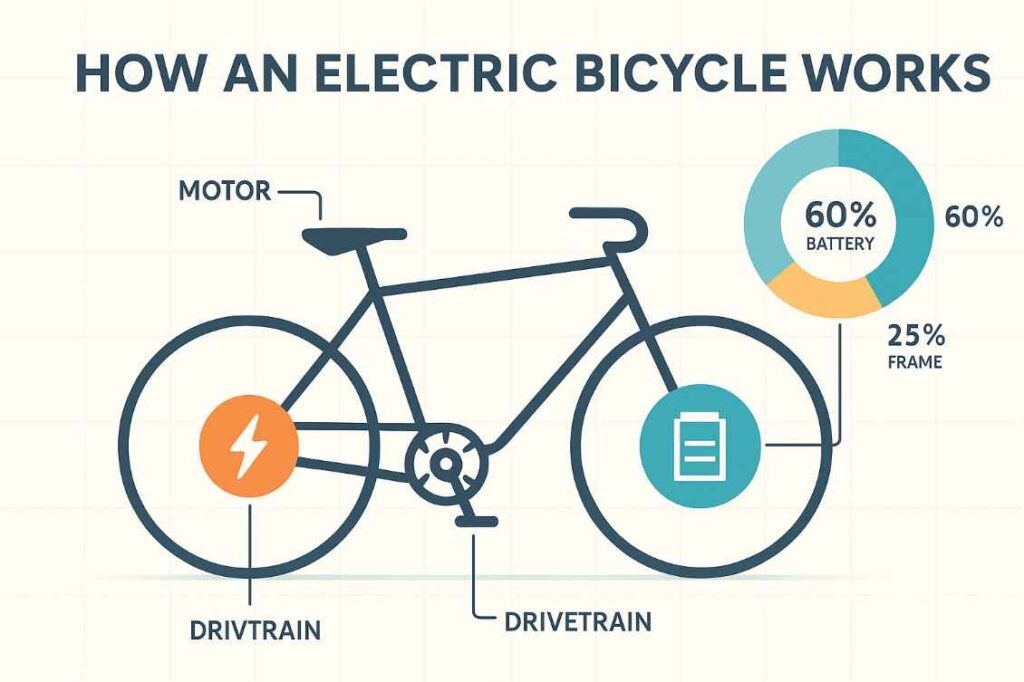
A battery bicycle (often called an e-bike or electric cycle) weds a standard bicycle frame to an electric motor powered by a rechargeable battery. Twist the throttle or engage pedal-assist and the motor supplies effortless propulsion. Because the motor has very few moving parts and no tailpipe, you enjoy whisper-quiet running and zero local emissions. Those same mechanical simplicities also slash routine maintenance costs compared with petrol scooters or bikes.
The battery pack plays the starring role in performance and, inevitably, in the battery bicycle price. Larger batteries deliver longer range and better acceleration but drive up up-front cost and charging time. Underestimating how much capacity you need is a rookie mistake; over-buying can drain your budget without delivering day-to-day benefits.
Running Costs versus Traditional Petrol Bikes
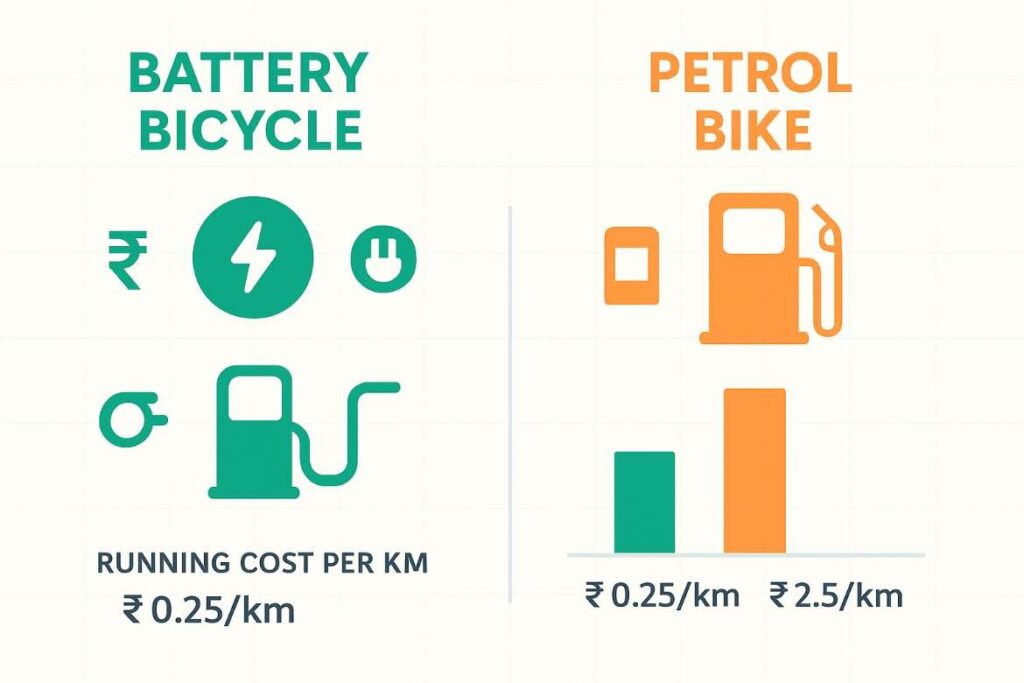
One full battery charge costs only a few hundred rupees—often less than you pay for a single litre of petrol. Fill a 5- or 6-litre tank on a 125 cc scooter and your wallet feels the pinch, especially as pump prices climb. Multiply that gap by your weekly commute and the savings become eye-opening. Maintenance is another wallet-friendly area. With fewer moving parts, there’s no engine oil, spark plugs or complex gearbox demanding attention. Unless the e-bike uses a chain drive—where you must still clean and lube—servicing stays minimal.
The result? Although you may pay a little more at purchase for certain models, the lower running and servicing costs can outweigh that difference within months, then keep saving you money for years.
Mapping the Current Battery Bicycle Price Range
Prices in India currently start at roughly ₹16,184 for entry-level electric cycles and climb to around ₹63,438 for premium urban commuters. Where your chosen model sits on that scale depends on:
• Battery capacity – higher watt-hours (Wh) cost more but extend range.
• Claimed range per charge – anything from 40 km to 105 km.
• Features – integrated lights, disc brakes, digital dashboards, swappable batteries or smartphone connectivity all nudge prices upward.
On-road charges vary by state, taxes and promotional offers, so always check final pricing for your pin code before committing. Comparing like for like is vital: a model priced at ₹55,000 with a 75-km range may actually be better value than a ₹45,000 bike that only manages 40 km per charge.
Popular examples illustrate the spread:
- Virbike V-Series (V1/V2/V3): ₹34,999 to ₹54,999 (various ranges)
- Motovolt Urbn e-Bike: about ₹49,366, up to 105 km range
- Hero Lectro Y3: around ₹28,886, roughly 40 km range
- EMotor Ranger: roughly ₹59,373, near-midway spec with around 75 km range
These figures give you a ballpark, yet discount schemes and festive offers can shift them, so stay alert to seasonal deals.
Performance, Range and Charging Realities
When you press the power button, you want instant, reliable zip. Most battery bicycles deliver rapid acceleration up to the legal limit for urban e-bikes. Low-speed variants trade top-end pace for affordability, while high-speed models can hold their own against many petrol scooters.
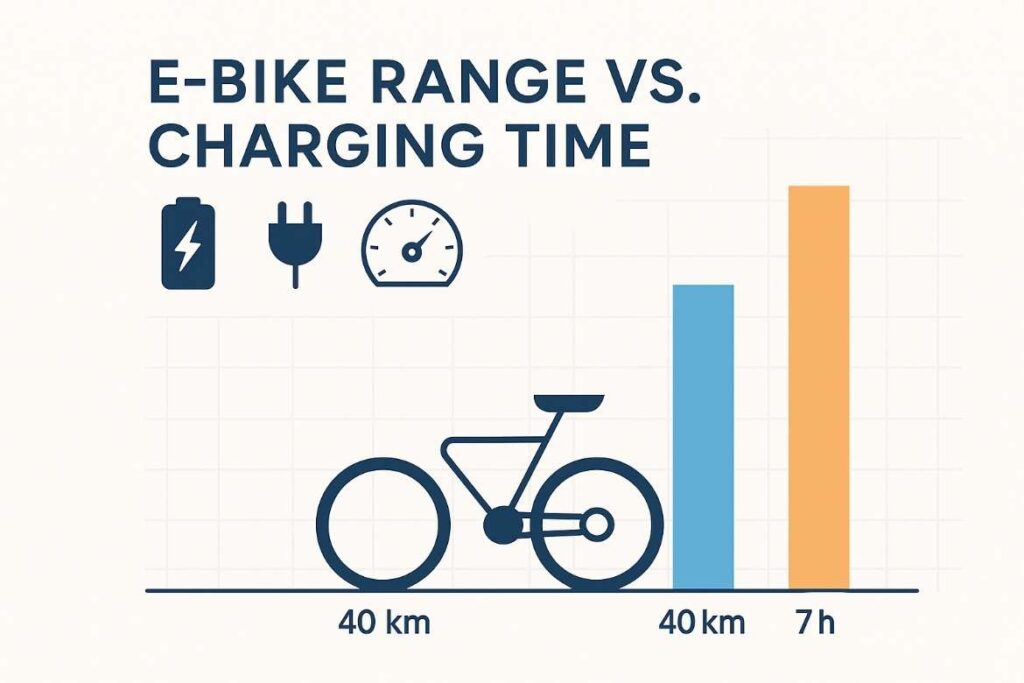
Range per charge sits between 40 km and 105 km for mainstream bikes. Charging times follow the size of the battery:
• Small packs can refill from empty in roughly 3.5 hours.
• Larger capacity units stretch to 7 hours.
Plan your day around those figures. If your round-trip commute is 30 km, a 60 km-range bike allows a comfortable buffer. Own a charger-friendly parking spot at home or work, and range anxiety disappears.
What to Weigh Up Before You Press “Buy”
- Audit your ride pattern
Log your typical daily distance and any occasional long journeys. Match that figure to a battery delivering at least 20 % more range than you need, so you’re never forced into inconvenient mid-day charging.
- Calculate lifetime cost, not just sticker price
Put the battery bicycle price beside projected fuel and maintenance savings. Many riders discover that a model costing ₹10,000 more initially can still save sizeable sums over three to five years.
- Explore finance and discounts
D2C platforms now quote competitive EMIs. A 6.99 % interest rate over 60 months can make a premium e-bike as affordable per month as an entry-level petrol scooter. Plug your numbers into an EMI calculator before visiting the showroom.
- Test ride several models
Comfort, handling and ease of battery removal (if it’s detachable) can differ hugely. What feels right to one rider may frustrate another. Try braking on a gentle slope, test pedal-assist response and gauge display readability in sunlight.
- Check the support ecosystem
A well-established brand such as Virbike or other national makers provides authorised service centres, spares availability and responsive helplines. Solid after-sales support safeguards your investment.
The Market Trajectory: Where Battery Bicycle Price Is Heading
Demand for greener commuting solutions keeps rising, pushing manufacturers to innovate. Expect future e-bikes to ship with higher-density batteries, extending range without a weight penalty. As economies of scale kick in, component costs fall, gradually narrowing the battery bicycle price gap with non-electric models.
Look out for:
• Faster-charging chemistry that drops refill times below two hours.
• Smarter energy management via mobile apps to eke out extra kilometres.
• Lightweight frames using new alloys or composites to offset battery mass.
Forward-thinking makers already prototype e-bikes with modular batteries, allowing you to carry an extra pack for weekend adventures instead of upgrading to an expensive high-capacity model. Over the next few years, you can reasonably expect more range, richer features and keener prices as the market matures.
Maximising Value: Practical Tips
• Install a dedicated home charging socket near your parking bay; convenience encourages regular top-ups and extends battery lifespan.
• Keep tyre pressures spot-on. Under-inflated tyres increase rolling resistance, reducing range.
• Adopt a smooth riding style—steady throttle and planned braking—to preserve energy.
• Store the bike (and battery if removable) in a cool, dry place; excessive heat accelerates cell degradation.
Ready to find the perfect electric bicycle that fits your budget? Explore our value-focused models at virbike.com and discover seasonal promotions that make quality commuting and leisure rides even more affordable!
Explore the Virbike V-Series
Compare features, performance, and pricing across our top electric cycle range.
Virbike V1
from ₹34,999- 36 V • 7.8 Ah removable battery
- Real-world PAS up to ~40 km
- Single-speed • Dual disc brakes • LCD display
Virbike V1+
~₹39,999- 36 V 10.4 Ah battery • Extended PAS range
- Dual disc brakes • Integrated headlamp
- Refined alloy frame • LCD display
Virbike V2
₹44,999 – ₹47,498- 36 V system • Removable battery (55/75 km options)
- Shimano 7-speed • Adjustable fork • Color display
- Alloy frame • Dual disc brakes
Virbike V3
₹54,999 – ₹56,990- 36 V in-tube 13 Ah battery
- PAS range ~65–70 km • MAXXIS tyres
- M5 LCD • Integrated headlamp & horn
*Actual range varies with rider weight, terrain, tyre pressure, and assist mode. Prices/specs subject to change.
Frequently Asked Questions
Q1. How much do electric bike batteries cost?
Most replacement packs for commuter e-bikes sit between ₹10,000 and ₹25,000, depending on capacity and brand. Larger high-range packs naturally cost more because they contain additional energy cells.
Q2. How much is an electric bike battery versus a motorcycle battery?
A typical e-bike battery is dearer than a small motorcycle lead-acid battery, yet it powers the entire vehicle, not just the starter. Over time, the fuel savings recovered by using that battery offset the higher purchase cost.
Q3. What battery size should I choose for my daily 25 km commute?
Aim for a model promising at least 40 km per charge. That buffer covers detours, gradual capacity fade and cold-weather losses while sparing you from daily top-ups.
Q4. Are battery bicycles really cheaper to run than petrol scooters?
Yes. A full charge costs only a few hundred rupees, and you skip oil changes, spark plugs and complex engine servicing. Even when you factor in battery replacement every few years, total cost of ownership remains lower.
Q5. My e-bike’s range has dropped suddenly—what should I check?
Verify tyre pressure first, then confirm you are completing full charge cycles. If both look fine, inspect for dragging brakes or a poorly lubricated chain in chain-drive models. Persistent issues may indicate battery ageing.
Q6. Can I negotiate battery bicycle price online?
Direct-to-consumer brands often run seasonal promotions or bundled accessory deals. Keep an eye on festive sales, comparison-shop across platforms and enquire about exchange bonuses to secure the sharpest price.