Understanding Dual Suspension Cycles
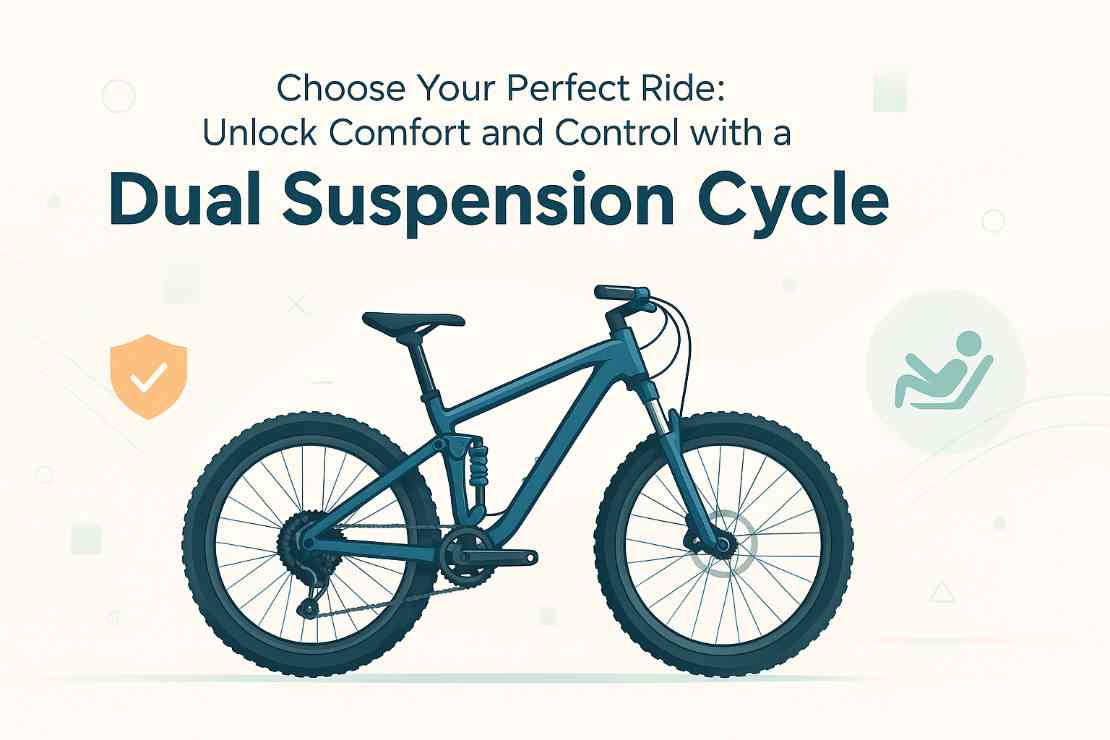
A dual suspension cycle, often called a full-suspension bike, uses two separate shock-absorbing units—one in the fork and one in the rear triangle—to soak up bumps that would otherwise rattle both rider and frame. By splitting the workload between front and rear, the system evens out harsh jolts from rocks, potholes, or broken tarmac, letting you maintain traction and steering accuracy when the surface turns sketchy.
Why does that matter for you? Comfort and control. With the shocks doing the heavy lifting, your body absorbs far less vibration, so long rides feel less fatiguing. Meanwhile, both wheels stay glued to the ground, boosting grip in tight turns or sudden descents. Riders who once avoided root-strewn forest paths or loose gravel lanes often discover an entirely new world of routes after switching to a dual suspension cycle.
Several elements appear across most models. Expect a dual-crown suspension fork up front for extra stiffness under load, a rear shock matched to the frame’s leverage rate, and a 21-speed (or higher) drivetrain that gives you the cadence needed whether you are crawling up a fire road or sprinting across town. Wider tyres come as standard for added contact patch, especially useful when the trail turns slippery.
When first shopping, many people mistakenly pick a bike based purely on looks or headline travel numbers. Instead, think about where you’ll ride. A plush, long-travel rig built for alpine descents may feel overkill on paved cycle tracks, while an ultralight cross-country frame can bottom out on stunt lines. Always take a test ride. Check that the suspension feels lively rather than spongy, and keep an eye on fit—an oversized frame will rob you of both power and confidence.
Explore the Virbike V-Series
Compare features, performance, and pricing across our top electric cycle range.
Virbike V1
from ₹34,999- 36 V • 7.8 Ah removable battery
- Real-world PAS up to ~40 km
- Single-speed • Dual disc brakes • LCD display
Virbike V1+
~₹39,999- 36 V 10.4 Ah battery • Extended PAS range
- Dual disc brakes • Integrated headlamp
- Refined alloy frame • LCD display
Virbike V2
₹44,999 – ₹47,498- 36 V system • Removable battery (55/75 km options)
- Shimano 7-speed • Adjustable fork • Color display
- Alloy frame • Dual disc brakes
Virbike V3
₹54,999 – ₹56,990- 36 V in-tube 13 Ah battery
- PAS range ~65–70 km • MAXXIS tyres
- M5 LCD • Integrated headlamp & horn
*Actual range varies with rider weight, terrain, tyre pressure, and assist mode. Prices/specs subject to change.
Key Features of Dual Suspension Cycles
Front and Rear Suspension Systems
A quality dual suspension cycle pairs a robust fork with a rear shock calibrated to rider weight. Together they swallow square-edge hits, roots, and kerb drops that would throw a hardtail off line. Look for external rebound and preload dials so you can fine-tune behaviour to the terrain.
Wide-Range Gear Systems
Most bikes sport at least 21 gears. That spread lets you spin easily up steep climbs, then click into higher ratios for quick flats. For mixed commutes that combine city streets with canal-side singletrack, the ability to flick through gears smoothly makes a major difference to average speed and knee health.
Dual Disc Brakes
Speed is useless without control. Twin rotors at each hub deliver consistent modulation in wet or dusty conditions, something rim brakes cannot match. Check that the callipers feel sharp and the levers engage early; spongy brakes suggest poor maintenance or air in the hydraulic lines.
Wider Tyres and Modern Rims
Extra millimetres of rubber translate into grip. Whether you float across loose gravel or tackle sudden speed bumps, the larger contact area keeps the wheels tracking predictably. Combine those tyres with tubeless-ready rims to safely run lower pressures for even more traction.
Maintenance Mindset
Suspension pivots need periodic greasing, air shocks require correct pressure, and brakes demand pad swaps. Ignoring these tasks is the fastest route to creaks, leaks, and loss of performance. Keep a simple logbook or set phone reminders—your dual suspension cycle will repay the attention with years of smooth riding.
Types and Configurations
Frame Material
Carbon steel remains a favourite in the value segment because it blends strength with cost-effectiveness. It shrugs off knocks without the price tag of aerospace-grade carbon fibre. If you plan regular bike-packing trips or lend your ride to friends, the toughness of steel is reassuring.
Size Spectrum
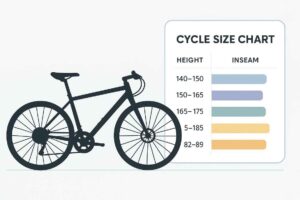
Manufacturers now publish height-based charts—for instance, a 35.5 cm frame suits riders 4’11” to 5’4″. Always measure your inseam and upper-body reach: two cyclists of equal height can still need different sizes due to leg-to-torso ratios. A quick consultation with a store expert eliminates expensive guesswork.
Foldable Formats
Urban riders juggling small flats and crowded trains increasingly gravitate to foldable dual suspension cycles. Hinged mid-sections let you stash the bike under a desk, yet modern locking mechanisms keep the structure stiff once unfolded. They make perfect companions for mixed-mode commutes.
Terrain Tuning
A cross-country configuration offers moderate travel, light wheels, and narrower bars for efficient pedalling. Trail-oriented setups add beefier tyres and more aggressive geometry. Meanwhile, stunt or dirt-jump builds use compact frames and burly shocks to absorb landings. Pick the variant that mirrors your favourite rides.
Performance and Use Cases
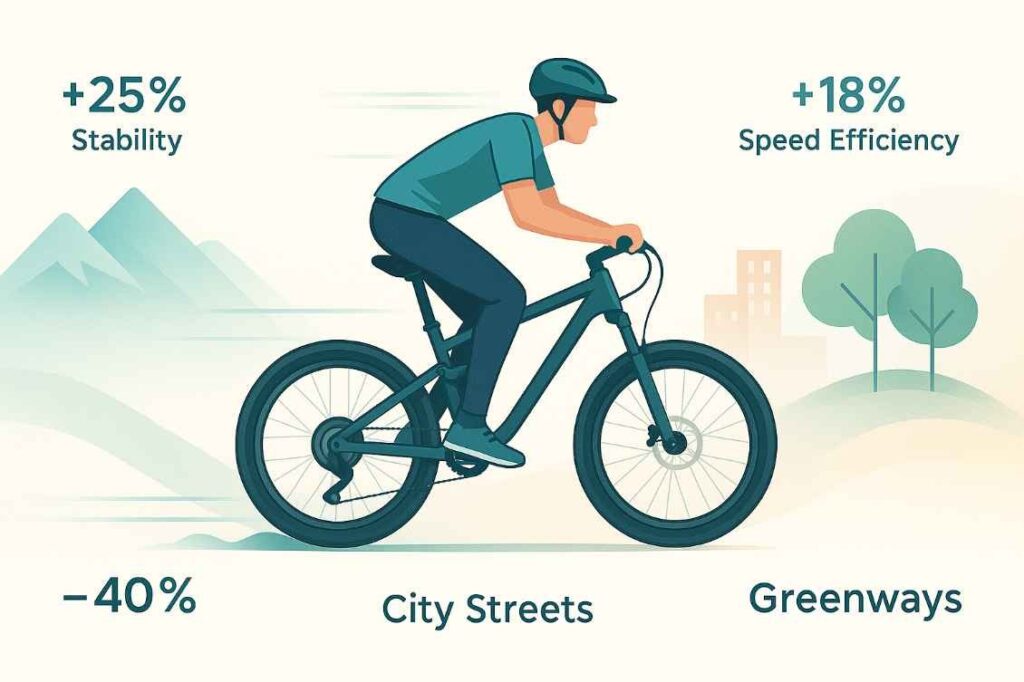
Downhill Dominance
Point the front wheel down a rocky chute and the advantages surface instantly. The fork tracks the fall line, the rear end hovers over ledges, and disc brakes restrain speed without locking.
Mountain-Bike Manoeuvres
Stunt riders who hop logs or rail berms benefit from the suspension’s ability to reset contact with the dirt after airtime.
City Versatility
Hydraulic suspension turns potholes and kerb drops into minor ripples, while a broad gear range makes short work of hilly suburbs.
Low-Impact Trail Cruising
Dial back fork compression, drop tyre pressure slightly, and enjoy a cushiony magic-carpet feel.
Pro Tips for Peak Performance
- Check tyre pressure before every outing.
- Clean the stanchions after muddy runs.
- Practise deliberate gear changes on gentle terrain.
Selecting the Right Dual Suspension Cycle
Measure Twice, Buy Once
Measure your inseam for accurate sizing. Virbike’s online tool helps determine the ideal frame length.
Inspect the Drivetrain
For climbing, choose a bike with an 11–34t cassette; for speed, opt for a close-ratio setup.
Brake Assessment
Squeeze levers firmly—pads should bite early without noise.
Expert Consultation
Experienced staff can quickly assess fit and shock pressure for your weight.
Final Checklist Before Paying
- Frame matches inseam and reach.
- Suspension sag set to 25–30%.
- All gears shift crisply.
- Tyres match terrain.
- Test ride completed.
Market Trends and Availability
Competitive Pricing
Discounts are common—₹29,999 models can drop to ₹15,300 during sales.
Diverse Line-Ups
From steel trail bikes to aluminium rigs with microshift drivetrains, there’s a model for every budget.
Design Evolution
Slimmer dual-crown forks and wider rims (2.4-inch tyres) are popular new trends.
Stock Alerts
Medium frames sell out fastest—enable restock notifications.
Smart Buying Sequence
- Enter your height to shortlist frames.
- Compare prices on multiple sites.
- Read owner reviews.
- Buy when size and features align.
Explore the Virbike V-Series
Compare features, performance, and pricing across our top electric cycle range.
Virbike V1
from ₹34,999- 36 V • 7.8 Ah removable battery
- Real-world PAS up to ~40 km
- Single-speed • Dual disc brakes • LCD display
Virbike V1+
~₹39,999- 36 V 10.4 Ah battery • Extended PAS range
- Dual disc brakes • Integrated headlamp
- Refined alloy frame • LCD display
Virbike V2
₹44,999 – ₹47,498- 36 V system • Removable battery (55/75 km options)
- Shimano 7-speed • Adjustable fork • Color display
- Alloy frame • Dual disc brakes
Virbike V3
₹54,999 – ₹56,990- 36 V in-tube 13 Ah battery
- PAS range ~65–70 km • MAXXIS tyres
- M5 LCD • Integrated headlamp & horn
*Actual range varies with rider weight, terrain, tyre pressure, and assist mode. Prices/specs subject to change.
Frequently Asked Questions
Q1. What is a dual suspension cycle?
A dual suspension cycle has shock absorbers at both the front fork and rear triangle for smoother, more controlled riding.
Q2. What is a dual suspension cycle with gear?
It’s a full-suspension bike equipped with a multi-speed drivetrain—typically 21 speeds or more.
Q3. What is a dual suspension cycle in India?
Entry models start around ₹12,000, while performance versions range between ₹20,000 and ₹40,000 after discounts.
Q4. How do I know which frame size is right for me?
Measure your inseam, consult size charts, and test ride.
Q5. What maintenance does a dual suspension cycle require?
Clean and lubricate the chain, check tyre pressure, and service shocks regularly.
Q6. Are foldable dual suspension cycles strong enough for off-road use?
Modern folding mechanisms and steel frames handle moderate trails, though non-folding frames are best for extreme downhill use.