Nothing matches the feeling of gliding along a country lane or weaving through morning traffic on a well-tuned cycle for men with gear. The right gearing system transforms every ride, letting you conquer steep climbs without burning out and sprint across flats without spinning out. In this guide, you’ll discover exactly how a geared bike works, what to look for when shopping, and the smart tweaks that make every mile faster, safer, and more enjoyable.
Why Gears Change Everything
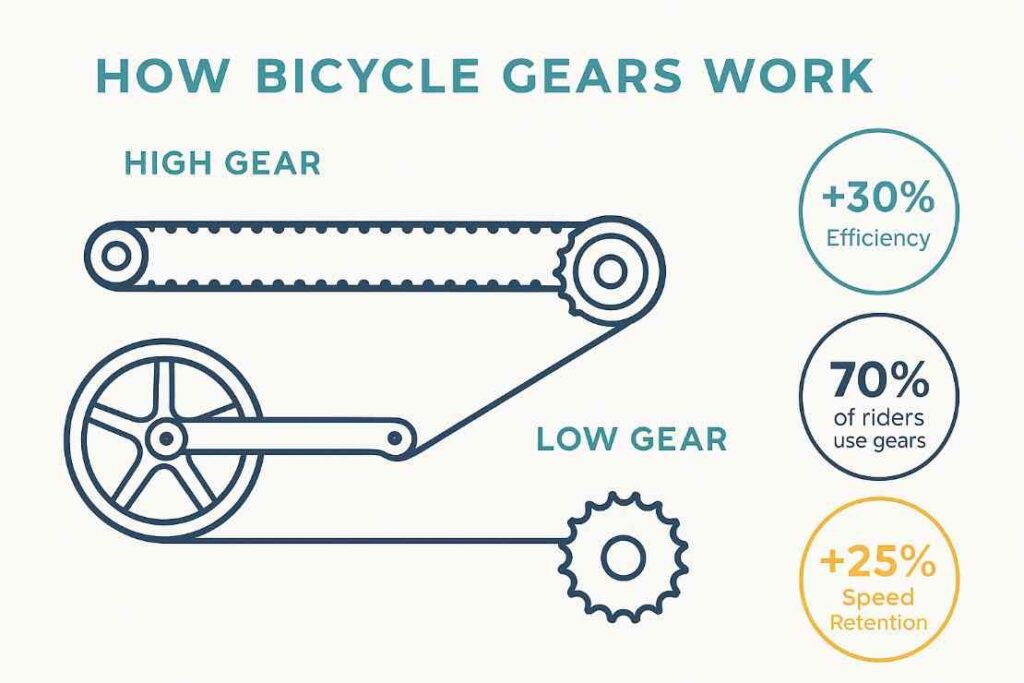
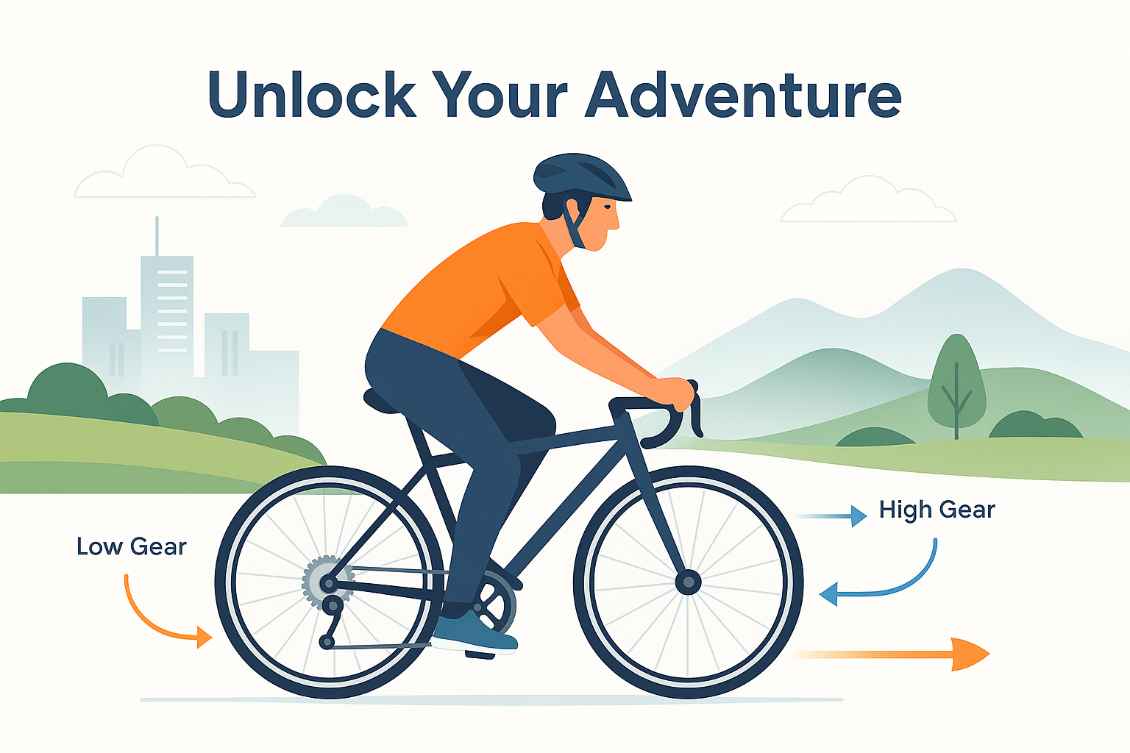
A cycle for men with gear uses a derailleur or internal hub system to alter the mechanical advantage between your pedals and the rear wheel. Drop to a lower gear on a hill, and each stroke feels lighter; flick to a high gear on the flat, and you turn fewer revolutions while maintaining speed. This flexibility explains why around 70% of riders choose geared bikes for daily commuting, weekend fitness, and off-road adventures. Whether you’re new to cycling or clock hundreds of kilometres a month, gears deliver three big wins:
• Versatility: one bike handles flat city paths, rolling lanes, and rugged bridleways.
• Efficiency: you hold an even cadence, reducing fatigue and knee strain.
• Speed: proper gear choice lets you accelerate quickly and maintain momentum with less effort.
Explore the Virbike V-Series
Compare features, performance, and pricing across our top electric cycle range.
Virbike V1
from ₹34,999- 36 V • 7.8 Ah removable battery
- Real-world PAS up to ~40 km
- Single-speed • Dual disc brakes • LCD display
Virbike V1+
~₹39,999- 36 V 10.4 Ah battery • Extended PAS range
- Dual disc brakes • Integrated headlamp
- Refined alloy frame • LCD display
Virbike V2
₹44,999 – ₹47,498- 36 V system • Removable battery (55/75 km options)
- Shimano 7-speed • Adjustable fork • Color display
- Alloy frame • Dual disc brakes
Virbike V3
₹54,999 – ₹56,990- 36 V in-tube 13 Ah battery
- PAS range ~65–70 km • MAXXIS tyres
- M5 LCD • Integrated headlamp & horn
*Actual range varies with rider weight, terrain, tyre pressure, and assist mode. Prices/specs subject to change.
Understanding Geared Cycles for Men
Before browsing specification sheets, get clear on how a cycle for men with gear behaves under real-world conditions.
Adjustable resistance
Gears work like selectable cogs on a tool kit. Lower gears (small chainring, large cassette cog) ease pedalling on gradients, while higher gears (large chainring, small cassette cog) let you cruise at pace on level ground.
Terrain ready
Because you can fine-tune effort, a geared bike suits commuting across mixed road surfaces, weekend gravel rides, or even mountain trails. Commuters appreciate gently accelerating from lights, then shifting up to keep pace with traffic. Fitness riders stay in an aerobic zone longer because they aren’t forced to grind hard when the road tilts upward.
Fit first
Even the best gearing will feel wrong if the frame is too big or small. Most men fall between 17- and 21-inch frames, but always check the stand-over height and top-tube length rather than guessing a ‘large’ or ‘medium’. A test ride is the simplest way to confirm reach and comfort.
Common pitfalls
• Buying a heavyweight bike on looks alone—extra kilos blunt the benefits of gears.
• Ignoring brake type—the best gear in the world won’t help if you can’t stop confidently.
• Overlooking maintenance—cables, chains, and cassettes need regular cleaning and lubrication for crisp shifting.
Key Features That Matter
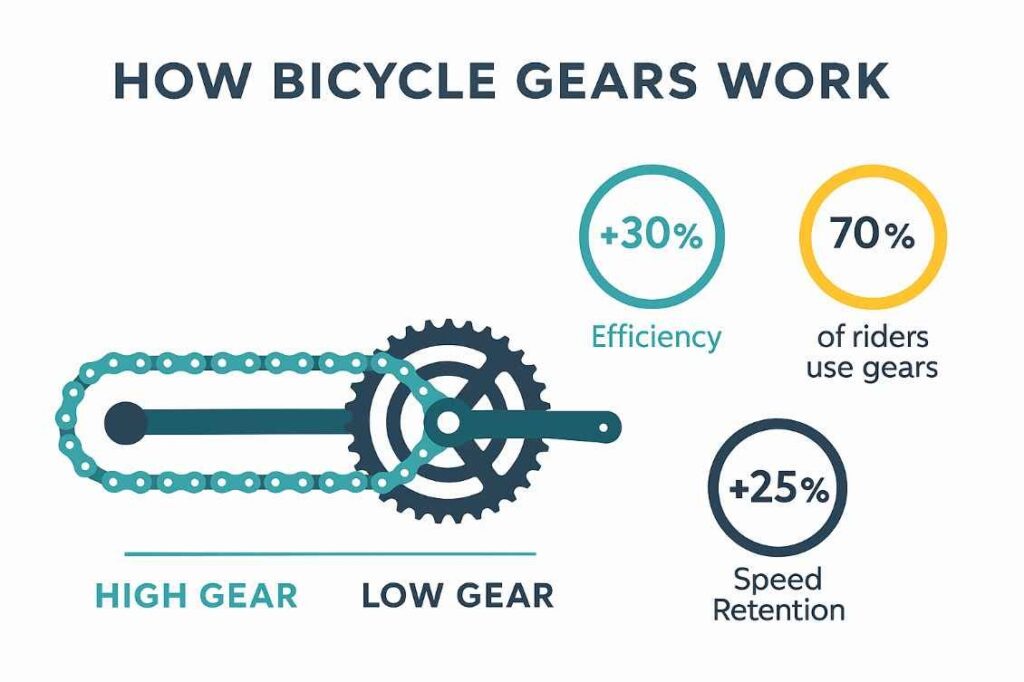
A modern cycle for men with gear can sport anything from a tidy 7-speed hub to a sprawling 27-speed cassette. Match these features to your riding style:
Multiple gear ranges
18-speed set-ups suit flatter routes, while 21- or 24-speed cassettes give broader coverage for hilly commutes and light trail duty. If you regularly tackle steep climbs, a wide-range 11-34 T cassette paired with a compact double chainring keeps your cadence in the sweet spot.
Front suspension
A suspension fork irons out potholes and gravel chatter. Look for lock-out capability so you can stiffen the fork on smooth tarmac, preserving energy and sprint response.
Disc brakes
Mechanical or hydraulic discs outperform rim brakes in wet and muddy weather, shortening stopping distances and boosting confidence. Riders report a 30% increase in control when descending once they upgrade to disc brakes.
Frame materials
• Aluminium: light, rust-free, and affordable—ideal for commuting.
• Steel: classic ride feel and durability, though a little heavier.
• Carbon or alloy-carbon blends: premium lightness and vibration damping for performance-minded cyclists.
Wheel size
Standard 700c wheels roll quickly on roads. If you prefer agile handling on trails, 27.5-inch (650b) wheels strike a balance between speed and manoeuvrability.
Internal cabling
Cables routed inside the frame look sleek and collect less grime, reducing maintenance and chain noise.
Exploring the Main Types of Geared Bikes
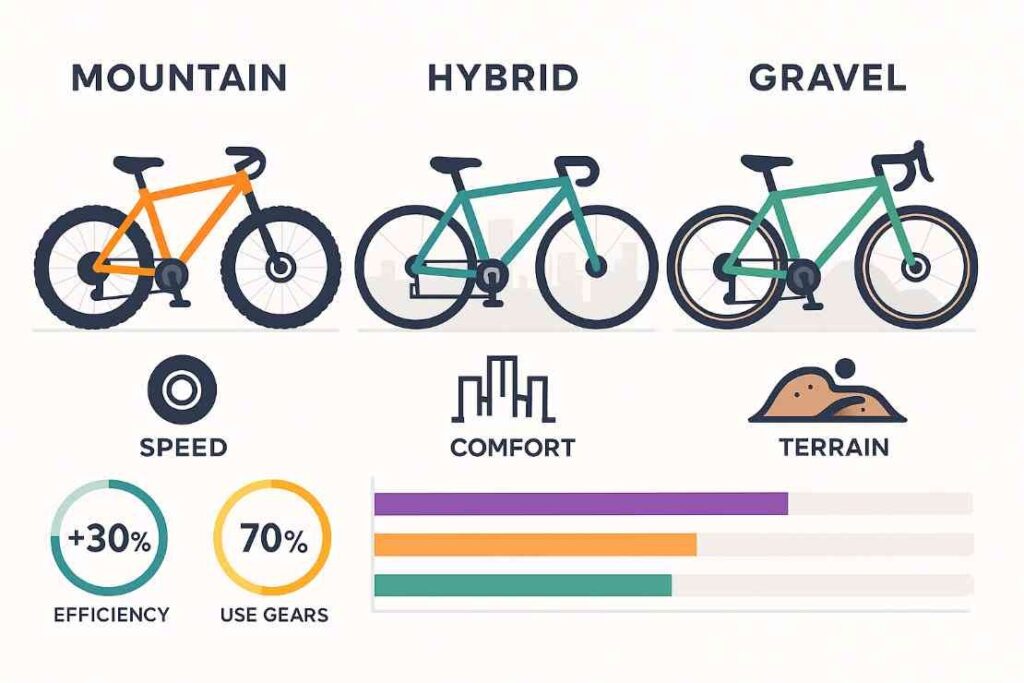
The phrase cycle for men with gear covers several bike categories, each built around different surfaces and speeds.
Mountain bikes
Knobbly tyres, front (and sometimes rear) suspension, plus wide 24- or 27-speed drivetrains help you muscle over roots and rocks. A mountain bike doubles as a robust commuter if you fit semi-slick tyres.
Hybrid bikes
Part flat-bar road bike, part mountain bike, hybrids use 700c wheels with medium-width tyres and front suspension. They shine on city streets, canal paths, and gentle trails.
Gravel bikes
Drop bars, disc brakes, and space for wider (40 mm+) tyres let gravel machines fly across broken lanes and bridleways without sacrificing road speed. Many come with clutch rear derailleurs to keep chains steady on rough surfaces.
Each style offers multiple frame sizes and gear counts, so focus on where you’ll ride most. If you split time 50-50 between tarmac and towpath, a hybrid or gravel bike provides an ideal combination of versatility and performance.
Tangible Benefits You’ll Feel from Day One
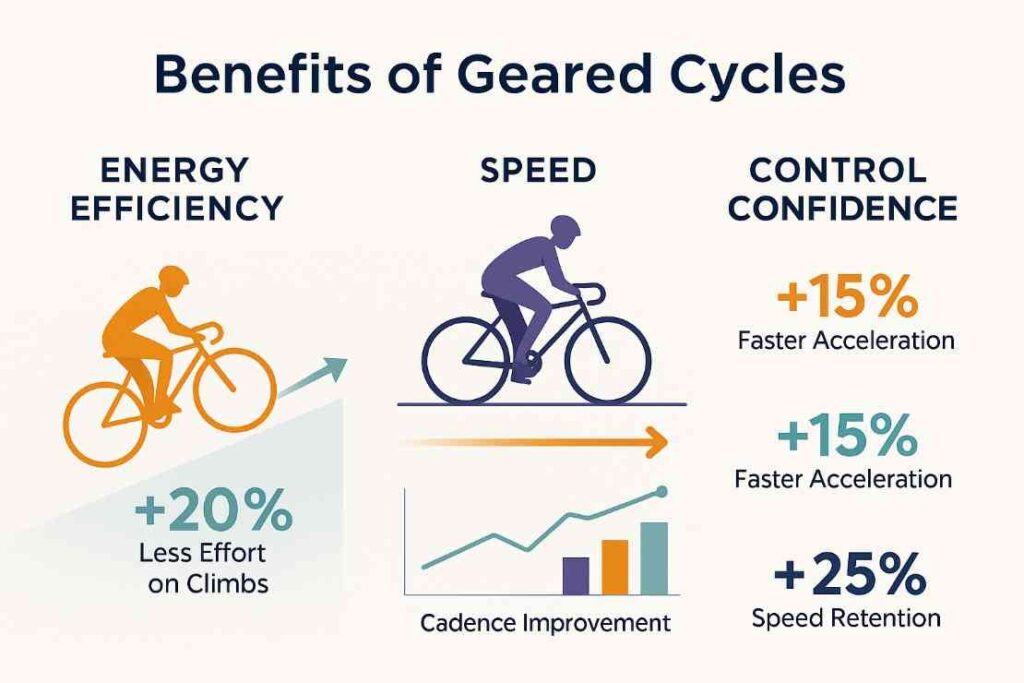
When you swing a leg over a well-chosen cycle for men with gear, the advantages reveal themselves instantly:
Superior control
Fine-tune cadence so your legs spin smoothly instead of grinding. This reduces joint stress and lets you respond quickly to traffic or changes in trail grade.
Energy savings
Maintaining an efficient cadence on climbs prevents early fatigue, letting you cover longer distances without blowing up.
Confidence in all weather
Disc brakes remain consistent through rain and muck, while a suspension fork softens washboard tracks, keeping tyres planted and steering predictable.
Skill progression
Beginners develop faster when they can experiment with gear changes, learning how cadence affects speed and stamina. Pros enjoy micro-adjusting ratios to eke out marginal gains.
Mental wellbeing
The ability to ride varied routes without fear of ‘that killer hill’ encourages more regular outings, boosting mood and general fitness.
How to Choose the Right Geared Cycle
Use this simple five-step process to narrow dozens of catalogues to the perfect cycle for men with gear.
- Define your riding environment
City streets, mixed terrain, or mountain single-track? The answer dictates tyre size, suspension travel, and gearing range. - Decide your gear count
• 18–21 speeds: mostly urban and recreational use.
• 24–27 speeds: regular hills, heavier riders, or off-road excursions. - Pick essential components
A lock-out fork for efficiency, hydraulic discs for power, and double-wall rims for durability are worthwhile upgrades. - Dial in fit
Stand over the frame with 2–3 cm clearance, check reach to bars, and ensure saddle height lets your knee stay slightly bent at the bottom of the pedal stroke. - Test ride
Shift through every gear, brake hard, and listen for rattles. The bike should feel stable yet responsive. If it doesn’t sing straight away, try another size or model.
Remember weight matters. A lighter frame paired with quality wheels makes acceleration snappy and climbs less taxing. Riders often drop a minute or more on regular hills simply by saving a kilo on their bike.
Enhancing Your Cycling Experience
You’ve found a great cycle for men with gear—now maximise performance and longevity with a few smart choices.
Go lightweight
Upgrading to lighter wheels or a carbon seatpost shaves rotational and static mass, translating into quicker sprints and easier lifting when storing the bike.
Lock-out savvy
Engage fork lock-out on smooth roads to prevent energy-sapping bobbing. Release it again when the path turns rough for added comfort and traction.
Brake bed-in
Spend the first 30 minutes, gently alternating front and rear disc brakes. This beds pads into rotors, delivering the full stopping power discs promise.
Keep it clean
A monthly chain wipe and lube routine extends drivetrain life, keeps gear shifts crisp, and preserves that satisfying ‘click’ of a well-indexed cassette.
Internal cable check
Although hidden cables need less attention, inspect them every few months for fraying where they exit the frame. Early replacement avoids mid-ride failures.
Why Virbike Stands Out
Virbike designs every cycle for men with gear around real-world riding, blending lightweight frames, precision 21- or 24-speed drivetrains, and tidy internal cabling. Whether you’re after a nimble city hybrid or a tough trail companion, Virbike’s line-up puts reliability and rider comfort first—so you spend more time enjoying the journey and less time in the workshop.
Simple Gear-Shifting Techniques
Mastering gears only takes a few rides:
• Anticipate the gradient: shift just before the hill, not halfway up.
• Ease pressure: momentarily reduce pedal force while the chain hops cogs.
• Avoid cross-chaining: keep the chain reasonably straight to reduce wear (for example, front big ring with mid to small rear cogs).
• Practise on quiet roads: muscle memory develops quickly when you focus on cadence rather than traffic cues.
Common Mistakes and How to Avoid Them
Mistake: Over-shifting in panic as you hit a climb.
Fix: Look ahead; downshift one or two gears early, then micro-adjust once settled.
Mistake: Buying too much bike—full-suspension when you only ride tarmac.
Fix: Match suspension, tyre tread, and gear range to actual riding time on each surface.
Mistake: Neglecting maintenance.
Fix: Schedule a 15-minute clean every fortnight; it saves costly replacements later.
Putting It All Together
A thoughtfully chosen cycle for men with gear unlocks year-round commuting freedom, weekend adventures, and improved fitness. Focus on a comfortable frame, the right gear range for your terrain, and reliable components such as disc brakes and lock-out forks. Treat your bike to regular cleaning and timely upgrades, and it will reward you with thousands of smooth, exhilarating kilometres.
Explore the Virbike V-Series
Compare features, performance, and pricing across our top electric cycle range.
Virbike V1
from ₹34,999- 36 V • 7.8 Ah removable battery
- Real-world PAS up to ~40 km
- Single-speed • Dual disc brakes • LCD display
Virbike V1+
~₹39,999- 36 V 10.4 Ah battery • Extended PAS range
- Dual disc brakes • Integrated headlamp
- Refined alloy frame • LCD display
Virbike V2
₹44,999 – ₹47,498- 36 V system • Removable battery (55/75 km options)
- Shimano 7-speed • Adjustable fork • Color display
- Alloy frame • Dual disc brakes
Virbike V3
₹54,999 – ₹56,990- 36 V in-tube 13 Ah battery
- PAS range ~65–70 km • MAXXIS tyres
- M5 LCD • Integrated headlamp & horn
*Actual range varies with rider weight, terrain, tyre pressure, and assist mode. Prices/specs subject to change.
Frequently Asked Questions
Q1. What is a gear cycle?
A gear cycle is a bicycle equipped with multiple sprockets and a derailleur or internal hub, allowing you to change the mechanical ratio between the pedals and the rear wheel. This lets you maintain an efficient cadence across different speeds and gradients.
Q2. How do I use gears on my cycle effectively?
Shift to lower gears before you start climbing so pedalling stays light, then move to higher gears on flats or descents to cruise without spinning out. Ease pedal pressure slightly during each shift to help the chain move smoothly.
Q3. How do you ride a gear cycle for the first time?
Begin on a quiet, flat stretch, practise shifting up and down while keeping your cadence steady, and familiarise yourself with brake feel. Once comfortable, introduce gentle hills and learn to anticipate gear changes before the gradient hits.
Q4. What advantages does a 27-speed bike offer over a 21-speed model?
A 27-speed drivetrain provides a wider range and closer gaps between gears, giving smoother transitions and better cadence control on steep or variable terrain compared with a 21-speed set-up.
Q5. My gears skip under load—what should I check?
First, inspect chain wear and cassette teeth; stretched chains or worn cogs cause skipping. Then ensure the derailleur hanger is straight and cable tension is correctly indexed. A quick tune-up usually restores crisp shifting.
Q6. Are geared bikes more expensive to maintain than single-speed models?
While there are extra components such as derailleurs and shift cables, routine maintenance mainly involves cleaning and lubricating parts you’d service anyway. With regular care, costs stay modest, and the performance gains easily justify the small added expense.
Ready to elevate your cycling experience with a reliable e-bike that combines performance and practicality? Explore our range of electric bicycles at virbike.com and find the perfect model to enhance your rides, whether for commuting or leisure!